As we move into mid October temperatures have been dropping and winds shifting (weekend warm snap aside) more and more to the north. It’s hard to believe we are now halfway through the season, but we are, and peak owl movement is just starting to begin in earnest.
The first part of the week saw nights with low winds from the north, northeast, or northwest, with temperatures in the 40s, one night dropping to the mid 30s. Then mid week a warm front rolled in and we had our first weather night of the season, with south winds gusting as high as 35 mph, and blowing our nets around far too much for the safe capture and holding of birds. Following this arrival of southern weather we had several days of balmy conditions in the 50s and even 60s overnight, with western or southwestern winds and Lake Michigan once again becoming swimmable. Despite our day of bad weather, we have been steadily catching birds in better numbers. On Sunday night we broke triple digits for newly banded saw-whets!
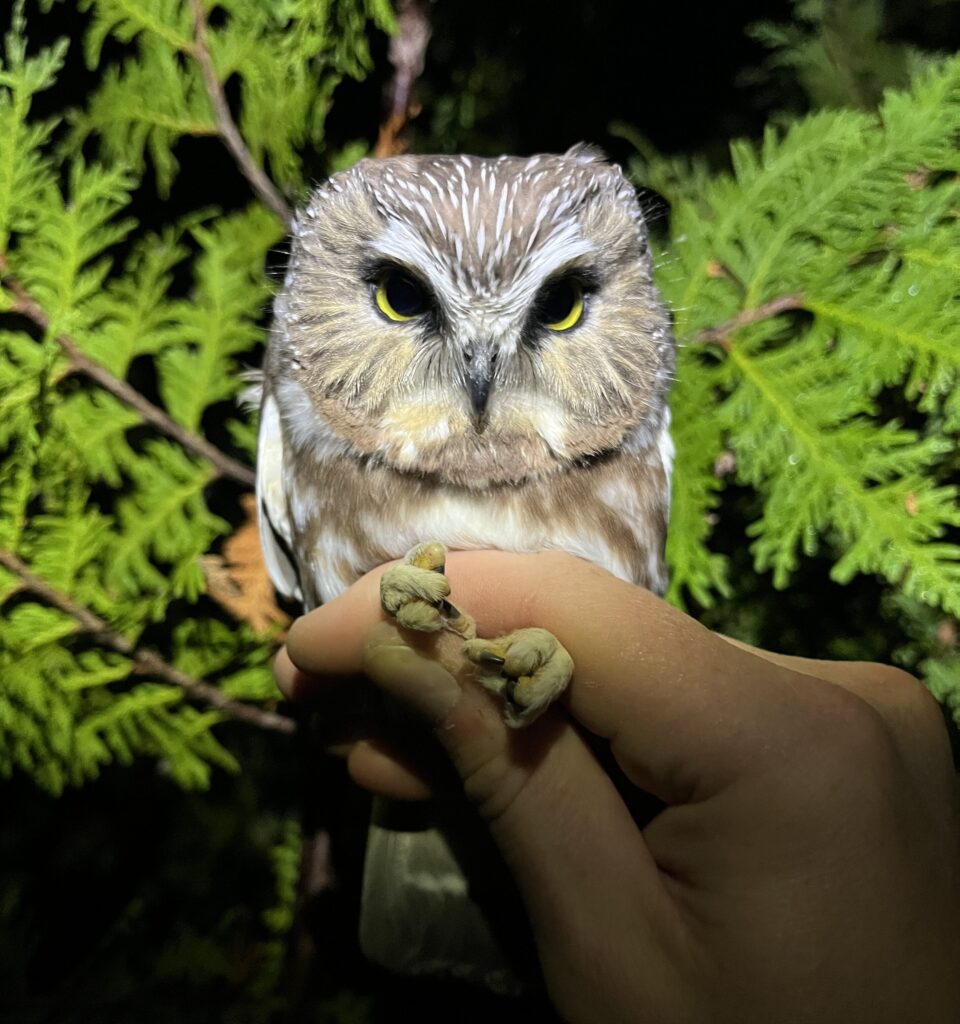
Among the individuals caught this week were a number of foreign recaps, birds originally banded at another owl station, and then caught again at Point LaBarbe. Of the individuals we have heard back from the banding lab on thus far, our first bird was banded at Long Point (Ontario) October 7, 2024 as a hatch year bird (born that spring), and is now three years old. We also caught an owl originally banded at Hawk Ridge (Minnesota) banded exactly one year after the first bird on October 7, 2025 also as a hatch year, and two years old when caught by us. Somewhat tragically we caught both these birds on October 6th, comically falling one day short of an exact year to date recapture. We finished off the week with another bird from Ontario, this one from Thunder Cape up on the northwestern end of Lake Superior banded last October as a second year bird, and now three years old.
Foreign birds were not our only banded captures, with several birds coming from MSRW banding operations in past seasons. We had one bird from fall banding at Point LaBarbe, first banded as a hatch year on October 8th, 2024 and not detected since until it flew into our nets on October 8th, 2026 exactly three years later in the same spot. Also excitingly we had one bird already caught this year by the spring owl banders on the other side of the straits at Cheboygan State Park in late March.
Otherwise banding has been good, although slightly below the overall average for this time of year. After our first night above ten birds last week, we have primarily had nights with birds in the low to mid teens, a pleasant uptick in activity. This has worked out nicely for our groups of station visitors, with birds caught early in the night each time, allowing everyone to experience the wonders of eastern North America’s smallest owl up close. And in some cases observe the process of bird banding and its scientific benefits for the first time. As a bander this is often a highlight of the work we do, and we also remain very grateful for the wonderful snacks bestowed upon us by this week’s visitors!
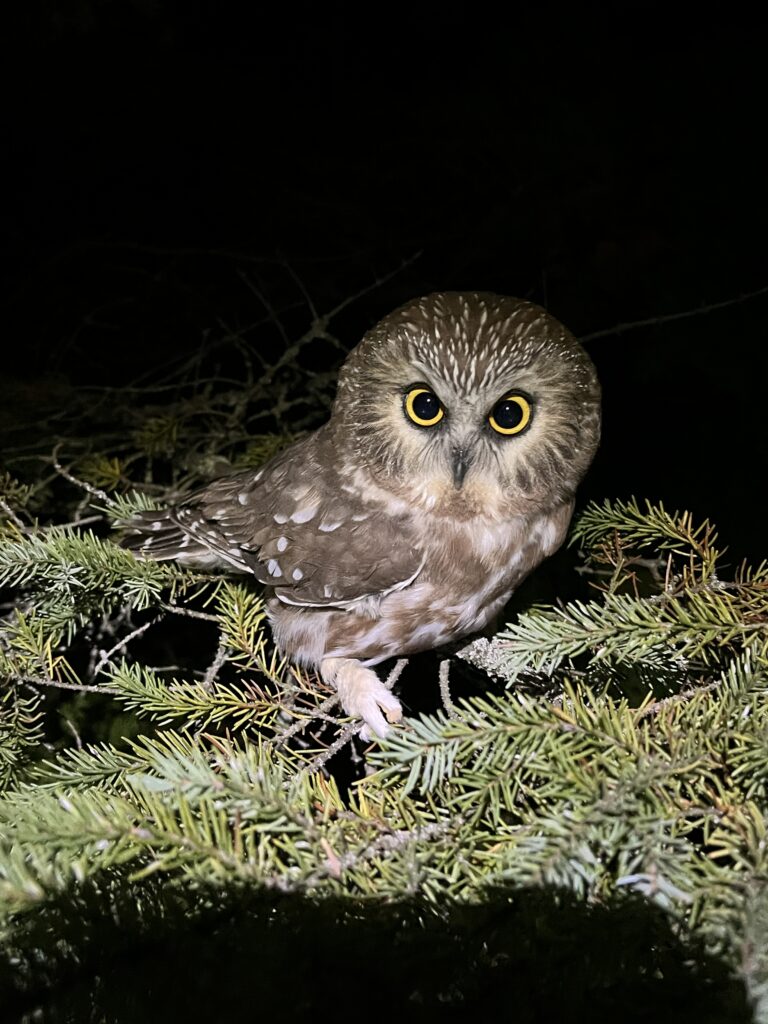
We also had our first night of the season where multiple birds were caught on a night with south winds of moderate force. This is more typical during peak movement periods when despite conditions at least a few birds will move simply due to volume, or late in the season when birds could potentially feel more pressure to move regardless of weather. Interestingly all of the owls we processed during south winds were larger older birds, with long wings and plenty of weight. All were at least in their second year of life. While it is entirely possible and far from uncommon that these were simply the individuals in the area that happened to make their way into the nets, it is interesting to speculate if more experienced and better physically endowed birds are more prone to move in slightly adverse conditions than their counterparts.
In the coming weeks we are moving solidly into the peak owl migration window for this site, and (at least currently!) the weather is looking great for some bigger pushes of birds. Hopefully a little species diversity as well. Our best night total stands at 15 as of this writing, and we plan to break that very soon!
Species totals to date: NSWO 103, SSHA 1, AMWO 1, AMRO 2, WTSP 1, HETH 1