Weekly totals are in ().
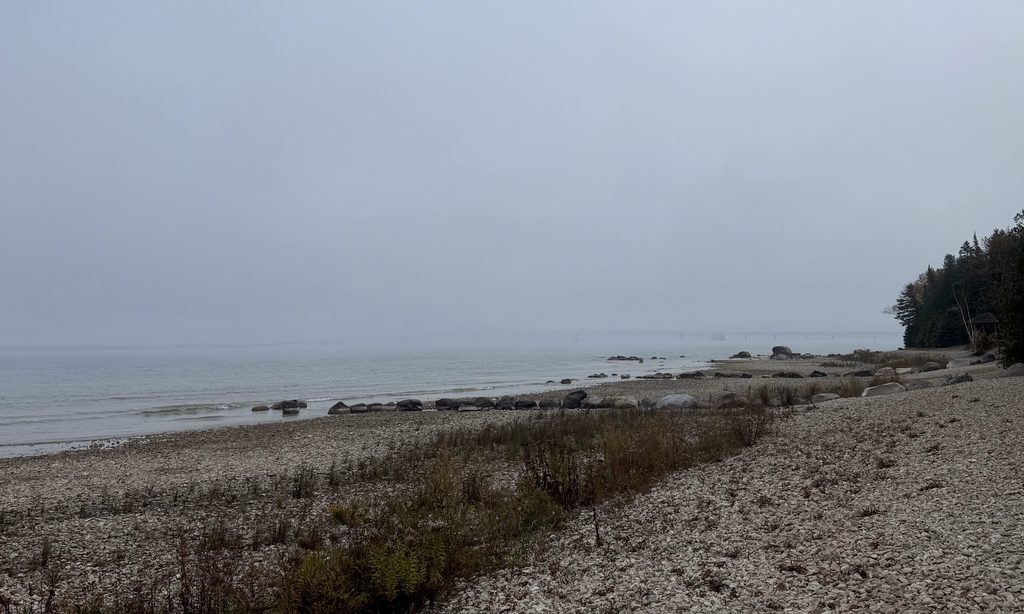
Warm weather has been fairly consistent so far this fall season. Only a couple minor cold fronts through the Great Lakes have notably encouraged duck flights. Temperature drops and shifts in weather patterns can be indicators of potential movements of birds. Stagnant winds on October 22nd and 23rd however forced a blanket of fog over the Straits leading to almost no waterfowl movement. By the 24th, the fog had lifted but sunshine and calm, south winds still hindered duck movement.
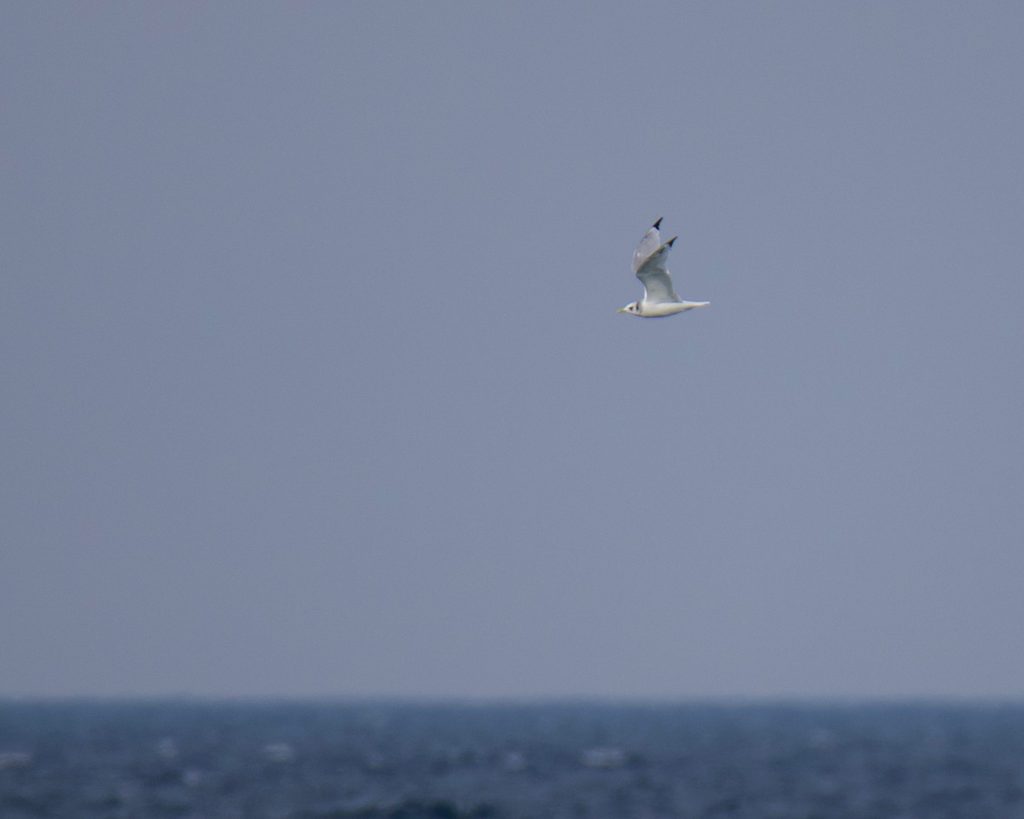
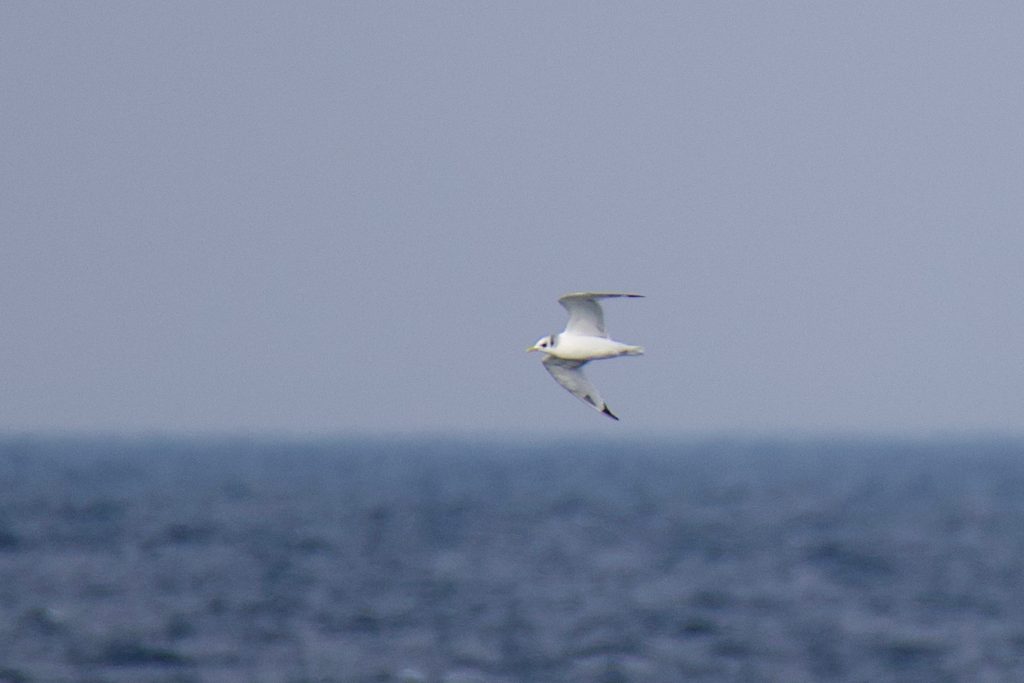
Fall waterbird migration instantly picked up the morning of the 25th. Ducks were already moving at dawn and continued as strong southwest winds off Lake Michigan shifted mid-morning to the northwest. Flocks of American Wigeon(76) were a highlight to an impressive mix of dabbling ducks consisting of Gadwall(5), Northern Pintail(9), Mallard(64) and Northern Shoveler(6). As we get further into late fall, dabbling duck movements and sightings will become far less common. Several small groups of Bonaparte’s Gulls(21) heading west were obvious indicators that a movement of waterfowl was progressing this morning. A rather late push of 28 Red-necked Grebes(46) were also counted throughout the day. Excitement was elevated when an immature Parasitic Jaeger(1) shot around McGulpin out towards Lake Michigan! By the afternoon, the duck flight eventually had slowed down. All of a sudden the count went from good to amazing when a Black-legged Kittiwake(1) rounded west by the point against the wind. Remarkably, this was an adult bird. Typical migrants found on the Great Lakes are immature birds. Kittiwakes are highly pelagic seabirds so having the opportunity to observe one of these gulls in the Great Lakes is rare.
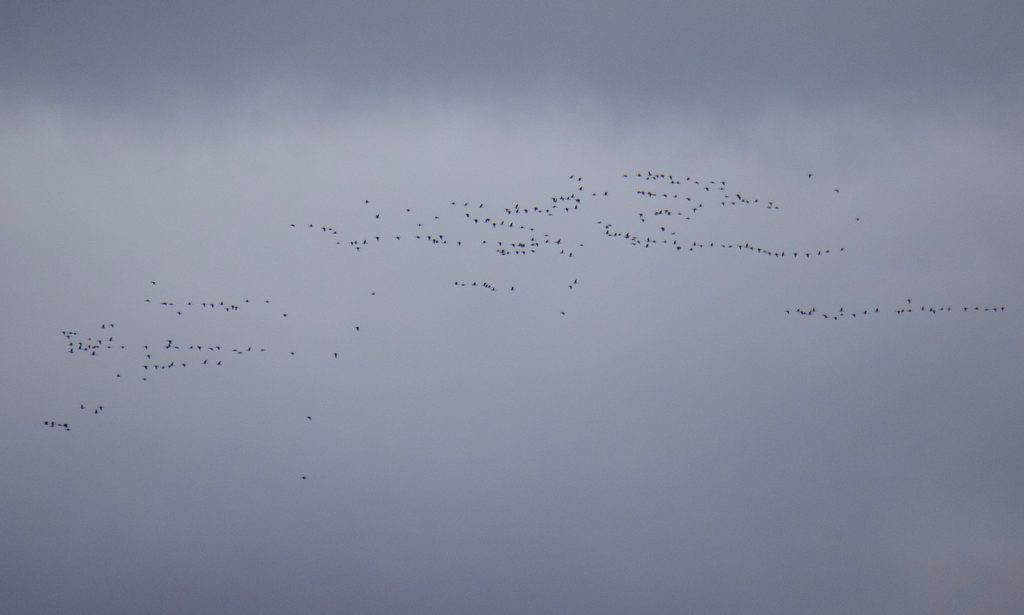
Numbers of Long-tailed Ducks(3,478) are typically small and infrequent until late fall. This week saw a huge movement of Long-tailed Ducks behind the cold front on the 26th. On the 27th, massive flocks moved west all morning past McGulpin leading to a total count of 2,497 Long-tailed Ducks migrating that day! Scoter movement aligned with other duck movement this week with a strong push of White-winged Scoters(220) on the 27th. Surf Scoter(8) and Black Scoter(9) sightings are less frequent but the count has seen small numbers of both species this week. Bufflehead(49) and Common Goldeneye(59) sightings continue to increase the further we get into the count season. Red-breasted Mergansers(256) are in peak season migration with continuous flocks moving through all week. Aythya ducks remain the most common type of duck with staging groups of Redhead(5,250) now numbering almost 2,000 in front of Graham Point. Small numbers Greater Scaup(59) and Lesser Scaup(43) and less frequently Canvasback(2) and Ring-necked Duck(3) can be seen flying within these flocks.
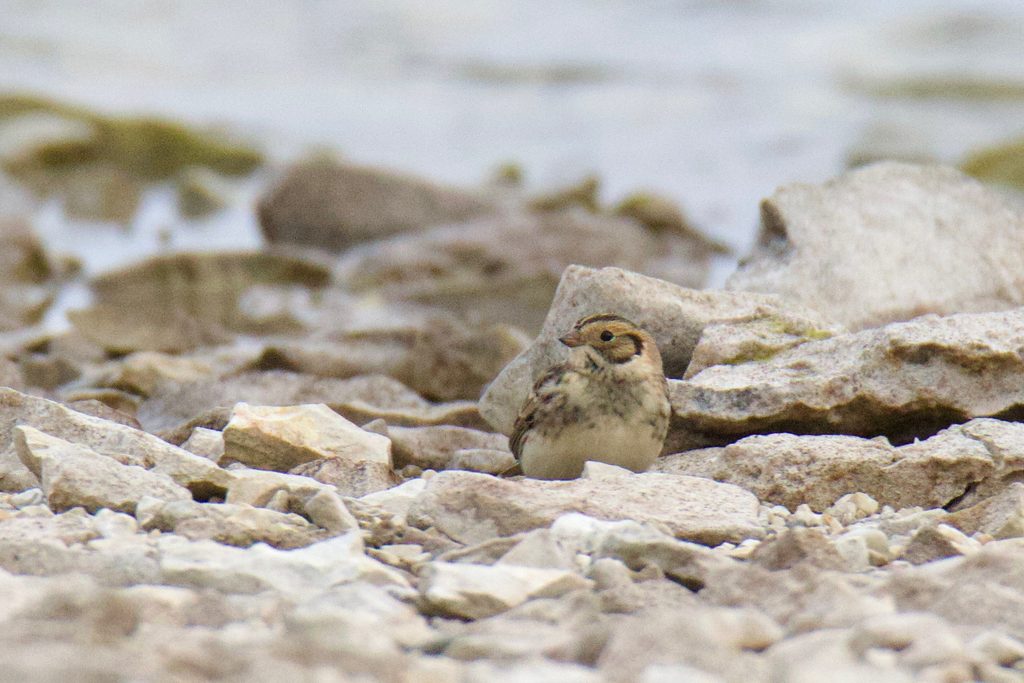
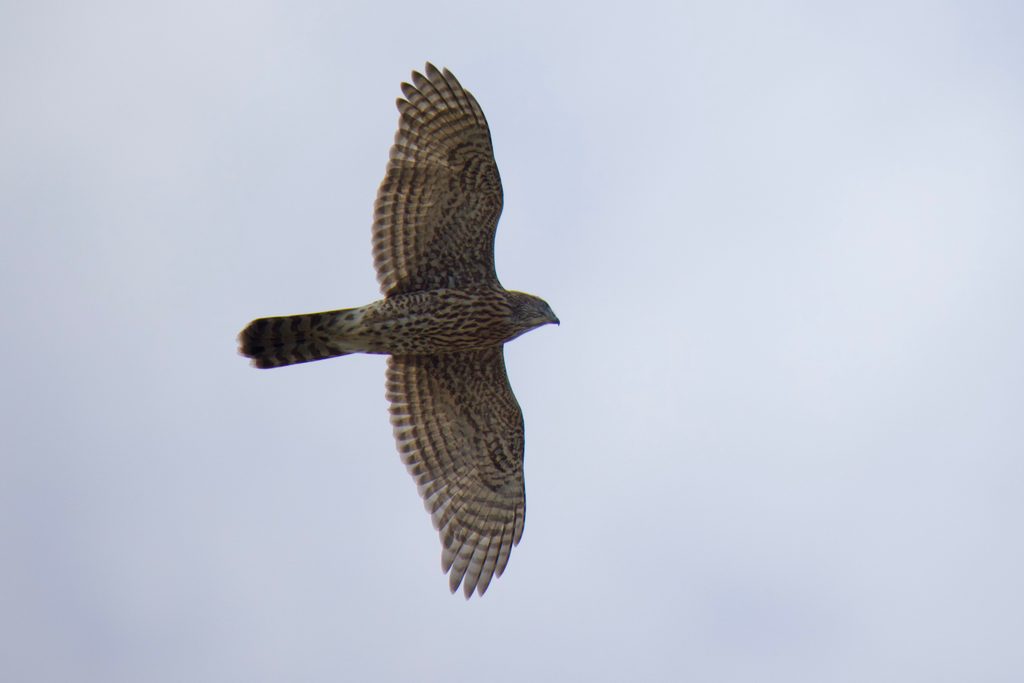
The second half of October has brought an influx of Snow Buntings through the Straits. The first Snow Bunting sighting for the count occurred on 10/22. By 10/27, over 100 Snow Buntings were counted with a push of birds behind this weeks cold front. Snow Buntings now outnumber the smaller groups of Horned Larks and Lapland Longspurs still lingering along the lakeshore. Other notable sightings this week brings the counts first American Goshawk on the 26th! Also on the 27th the counts first Tundra Swans(5) were observed migrating south over the Straits! Be on the lookout for these small dark-billed swans as they start showing up in fields and/or in local water patches.