
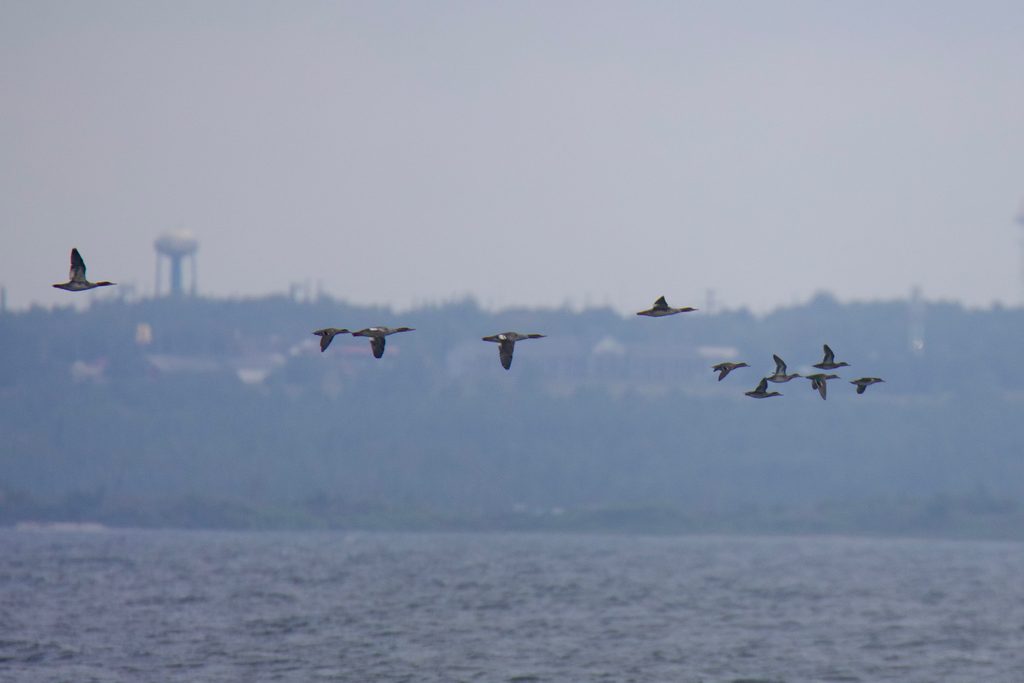
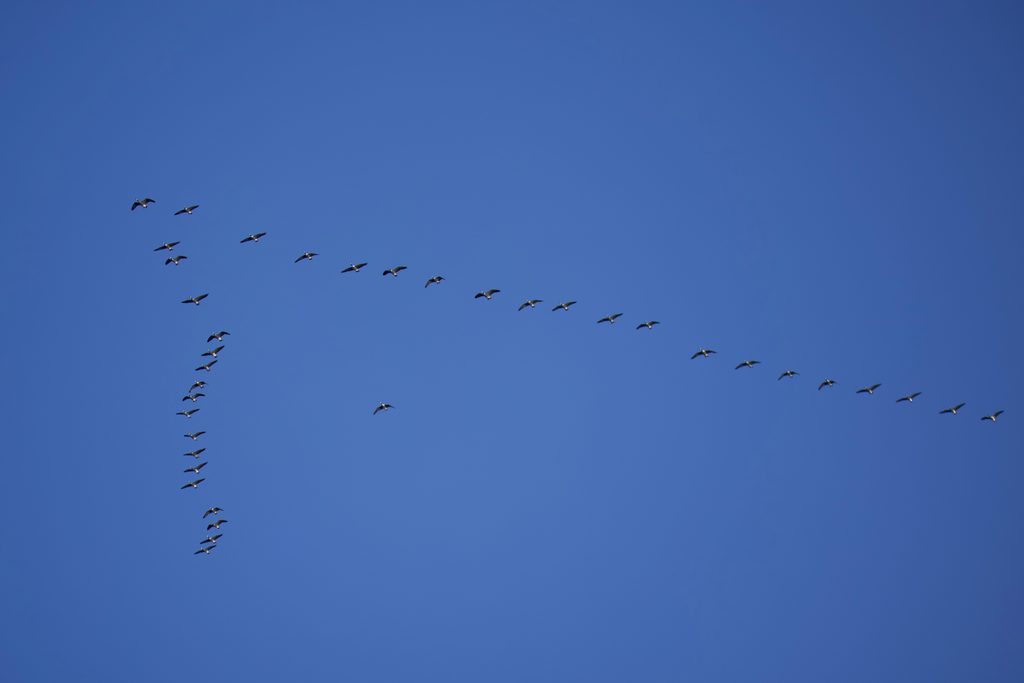
September has started hot for waterbirds! Not just warm temperatures but with increasing duck flights and diversity. Canada Geese kicked off their reputable southern migration this week with strong movements over the Mackinac Straits(1,689). Sightings of migrant goose flocks will increase in frequency through September. Care must be taken to check for any other uncommon goose species associating with migrating flocks.
Fall lakewatching can be thrilling with unusual or rare sightings of certain arctic tundra nesting seabirds, gulls or ducks that move south through the Great Lakes. Jaegers are a particular seabird that can be the highlight at any lakewatch. Three jaegers were sighted this week at the count, two immature jaeger species(2) and an adult Parasitic Jaeger(1) on September 6th!
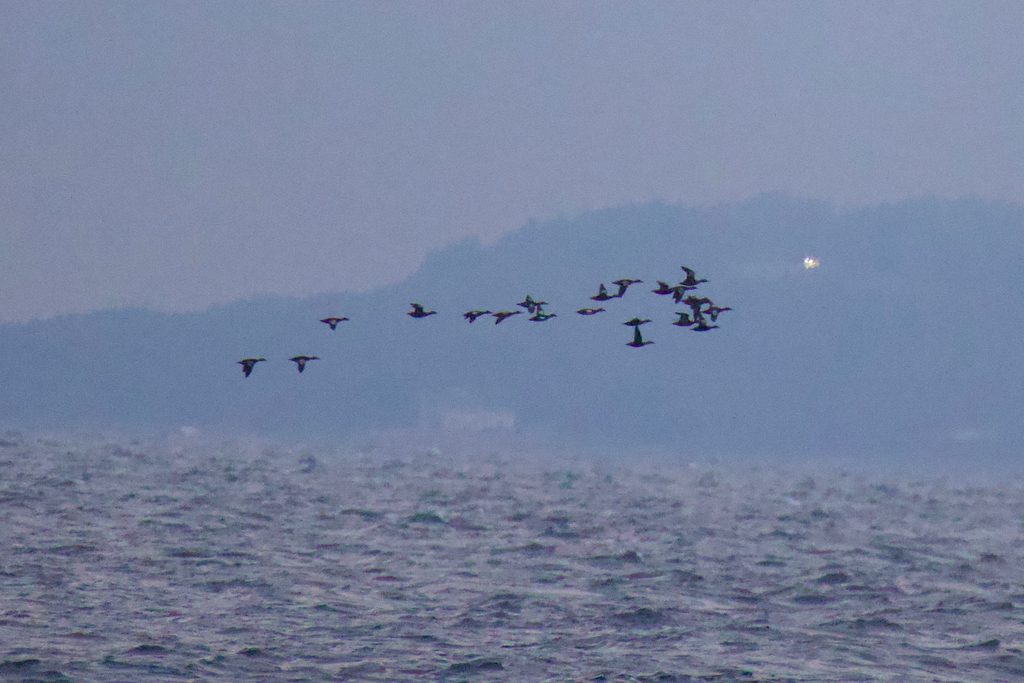
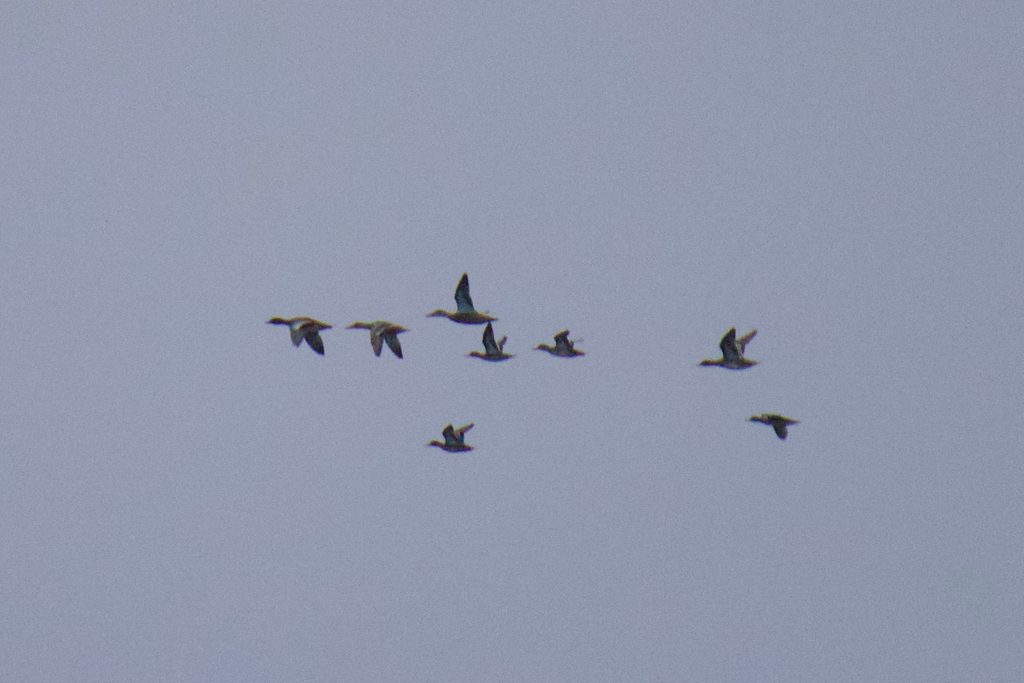
Waterfowl diversity has notably increased this week! Storm fronts on the mornings of September 4th and 9th favored movements of both dabbling ducks and teal. On the 9th, following a burst of morning rain, teal dominated the flight with sizable flocks and mixed flocks of Green-winged Teal(162) and Blue-winged Teal(70). Dabbling duck numbers such as Northern Shoveler(4) and American Wigeon(11) have picked up this week as expected. Aythya duck and diving duck sightings are still infrequent at the count in early September, but considerable numbers will begin moving through in mid to late fall. Red-necked Grebes(127) can still be seen almost daily from the count in September as good numbers still trickle through. Horned Grebes(4) have returned to the Great Lakes and are unique to watch with their awkward, inclined flight. Common Loon(123) sightings are increasing in frequency and are expected to peak over the next few weeks, with dozens able to be seen heading south over the Straits daily. Red-throated Loon(8) sightings will also increase and become regular as fall progresses.
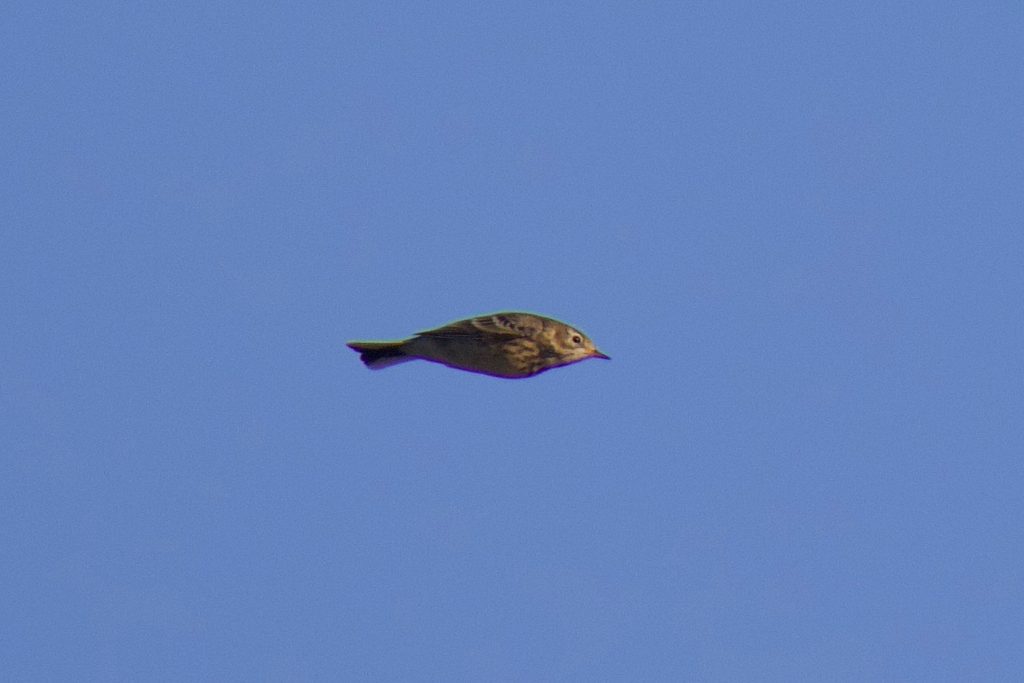
Many changes are associated with fall migration – the leaves will lose their green color, the weather is cooler, and there’s more geese on your local golf course. With these changes, transitions in the types of species seen around McGulpin and Graham Point gradually shifts. Species such as American Pipit can now be observed daily moving along the shoreline vegetation. Blackbird flocks can now be seen shifting around the point are usually a neat mixture of Grackles and Red-winged Blackbirds. Rusty Blackbirds are soon expected to follow. As warbler diversity decreases, sparrows, kinglets and winter finches will be on the rise. Bring on the cold fronts!
Notable sightings this week: Northern Shoveler(4), American Wigeon(11), White-winged Scoter(1), Common Goldeneye(3), Black-bellied Plover(1), Parasitic Jaeger(1), Jaeger sp.(2), Redhead(15), Bonaparte’s Gull(10), Red-breasted Merganser(18), Lesser Black-backed Gull(1), Red-throated Loon(8), and a Dickcissel(1)!!
Weekly totals can be found in parenthesis ().