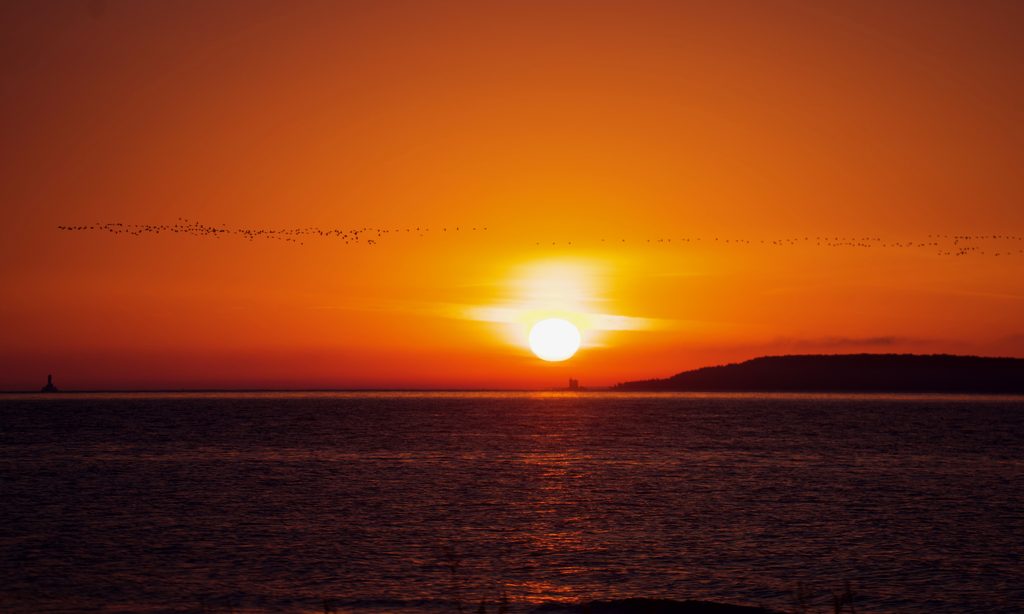
Weekly totals are in ().
Warmer temps and sunshine started this week with relatively little duck movement. On the morning of 10/08, over 1,000 Redhead were counted as they foraged and rested in dense rafts east the Mackinac Bridge. In mid-to-late fall, these rafts are often flushed in the morning by boat or ferry traffic through the Straits. Most of these Redhead will takeoff and stream northeast towards St. Martin Bay in the morning. Careful inspection of these flocks can reveal scaup, mergansers, dabbling ducks and even scoters flying within these flocks or within other mixed duck flocks.
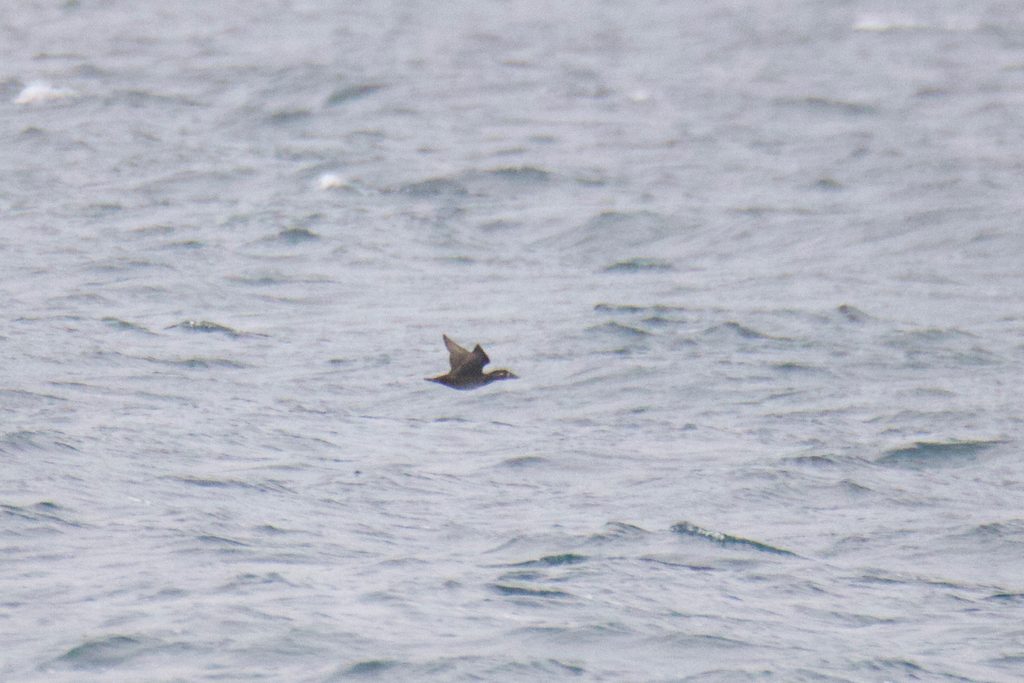
Mid-October has started with a good initial push of winter season waterfowl such as White-winged Scoters(137), Long-tailed Ducks(270), and Red-breasted Mergansers(185). All three expected scoter species were recorded this week, White-winged Scoter, Surf Scoter(17), and Black Scoter(3). A few Surf Scoters have been foraging alongside Redhead flocks in front of Graham Point for several days now. Horned Grebe numbers remain steady with a high count of 14 on the 11th. Horned Grebes are usually seen diving for food in front of Graham and McGulpin on calmer days. Red-necked Grebe(27) sightings are becoming less frequent in the latter half of the season. Loons continue to highlight the count daily. This week saw several pushes of Common Loons(203) as well as occasional sightings of Red-throated Loons(13).
Waterbird counting in Mackinac Straits during migration season is supplemented by the ability to see active raptor migration along the shoreline and over the water. Graham Point and McGulpin Point do not necessarily see the kettles that occur over Point LaBarbe in the fall, but they do see frequent raptor activity. Most of the raptors sighted are streaming south as they attempt to cross over water into the lower penninsula in the most efficient way possible. When the wind direction is encouraging, raptors can be frequently seen migrating over water through the Straits. Sharp-shinned Hawks(26), Northern Harriers(7), and Turkey Vultures(127) were notably taking advantage of winds this week.
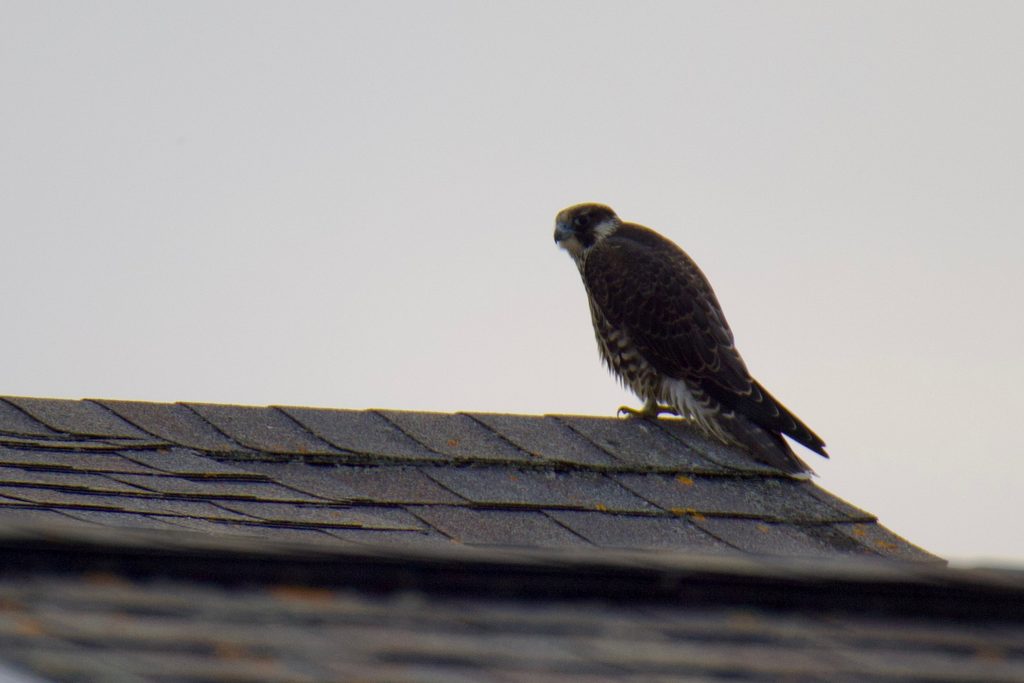
The waterbird count brought several exciting moments this week. During the last hour of a rather slow count day on the 11th, the second Short-eared Owl(1) of the season was spotted lazily gliding over the lake southwest! The following day, winds picked up swiftly from the northeast to east. As the waves started swelling at Graham Point, the third Parasitic Jaeger(1) of the season rounded the point northeast, likely blown in off Lake Huron.
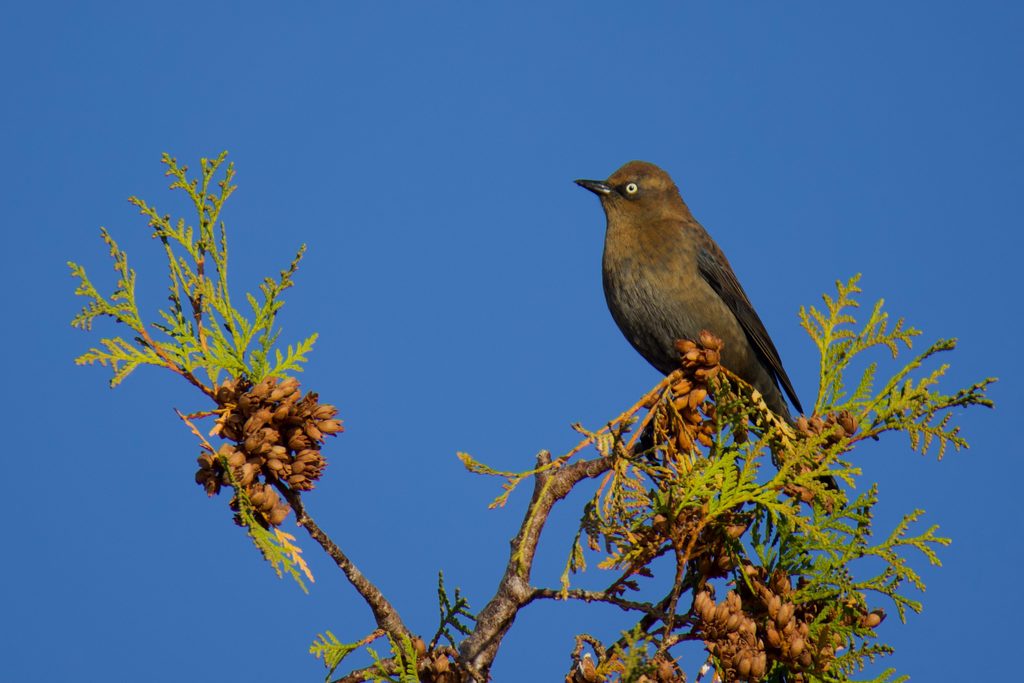
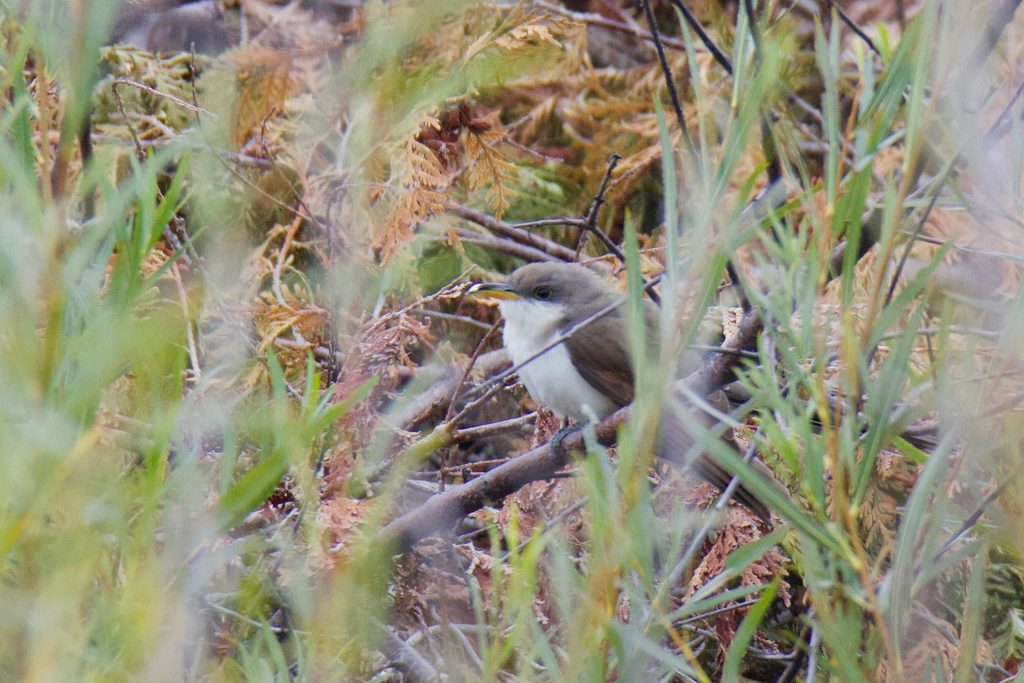
Passerine movement has been steady but exciting all week. As blackbirds disperse from nearby marshes, Common Grackles and Rusty Blackbirds have been frequently sighted around Graham Point. American Pipits continue to be a daily sighting around both count sites. Pipits often forage along the rocky lakeshore and small groups of Horned Larks or Lapland Longspurs are now appearing amongst them. Sparrows are in peak form with clusters of White-crowned Sparrows mixed with White-throated Sparrows. Dark-eyed Juncos will soon replace these other sparrows as they move on. Pine Siskin flocks occasionally can be heard passing overhead. Notable sightings this week include our first Yellow-billed Cuckoo of the season on 10/12!
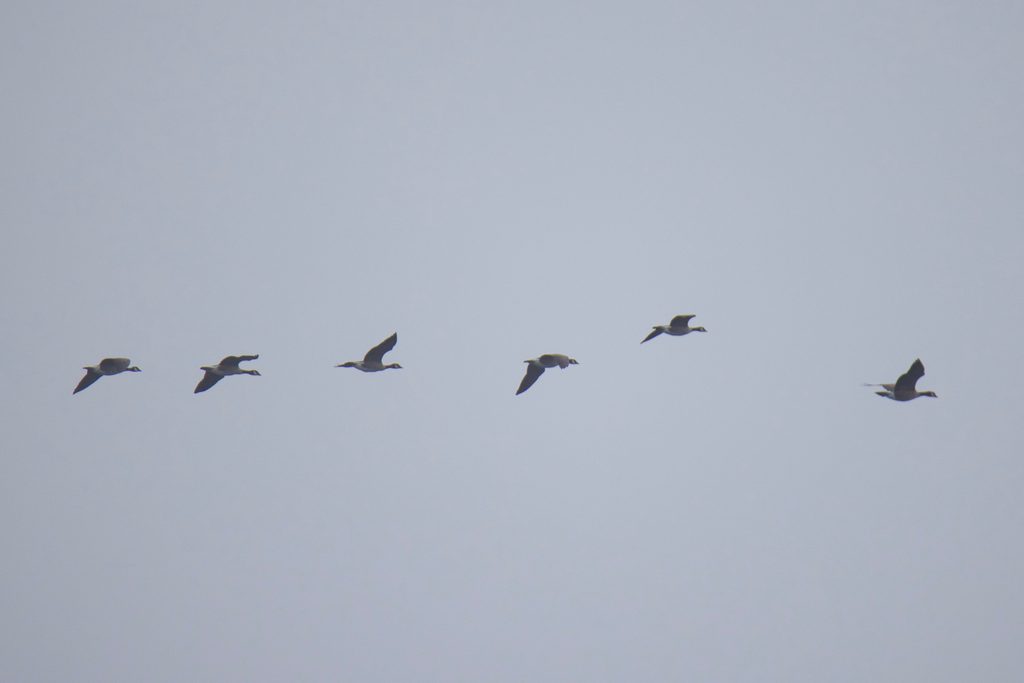
October is great month for diversity in geese. Canada Goose numbers have dropped drastically after the initial September migration wave. It has been a great season thus far for Cackling Geese. On a rather calm, foggy morning on the 13th, a small group of six Cackling Geese made their way along the shoreline past McGulpin. Surprisingly, these were the only geese seen that day. The count has yet to record a Snow Goose this fall, but reports around the Upper Peninsula suggest these geese are on the move. The second half of October should bring some exciting birds as we enter vagrancy season!