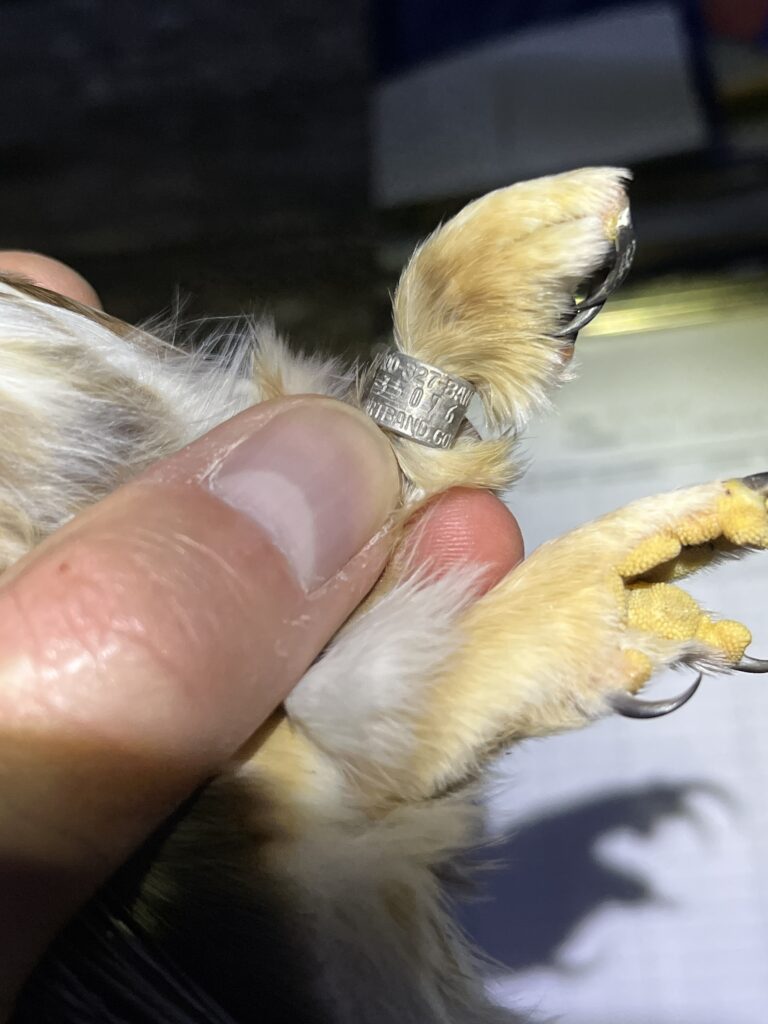
We gained some momentum this week despite some unfavorable weather. We battled rain and southerly winds across the end of September, but things took a turn for the better once we rounded the corner into October. Winds shifted to the northwest, which are much more conducive for fall movement. We had our first double-digit night on October 1 with 10 birds. Here’s to hoping that this will be considered a “slow” night within the next few weeks. However, it was not the number of birds we caught that was so significant but rather who we caught: three of the birds were already banded, and none of them were our birds from this year. Banding serves a vast scientific purpose but recaptures provide perhaps the most coveted kind of data. We still know so little about the flight paths of these owls so every new bird that is recaptured provides invaluable data on where exactly they travel. To have three such birds in one night is very exciting to say the least. We’ve already heard back from the bird banding lab about two of these birds: one was banded here at Point LaBarbe on 10/24/24 as a hatch year female, which makes it an after-second-year (ASY) bird now. The second was banded at Whitefish Point on 08/09/25 as a hatch year female, which makes it a second year now.
Migration has a strong learning component to it—that is, older birds typically have more sophisticated and effective flight paths than younger birds, simply due to experience. Thus, seeing an older owl choose to use Point LaBarbe for multiple years suggests the location’s suitability and importance for migrating owls in a way that we don’t necessarily get just from looking at the quantity of birds that are documented here. The second bird also provides interesting data; although we don’t know exactly what route she took, it suggests connectivity between Point Labarbe and Whitefish Point. Although these are speculations based on two individuals, it becomes meaningful when we accumulate data points across many individuals over long periods of time, which MSRW has certainly done. That is why it is so important to run these stations year after year.
The third recapture we aged as a hatch year and her data has yet to be submitted to the bird banding lab, which we eagerly await.
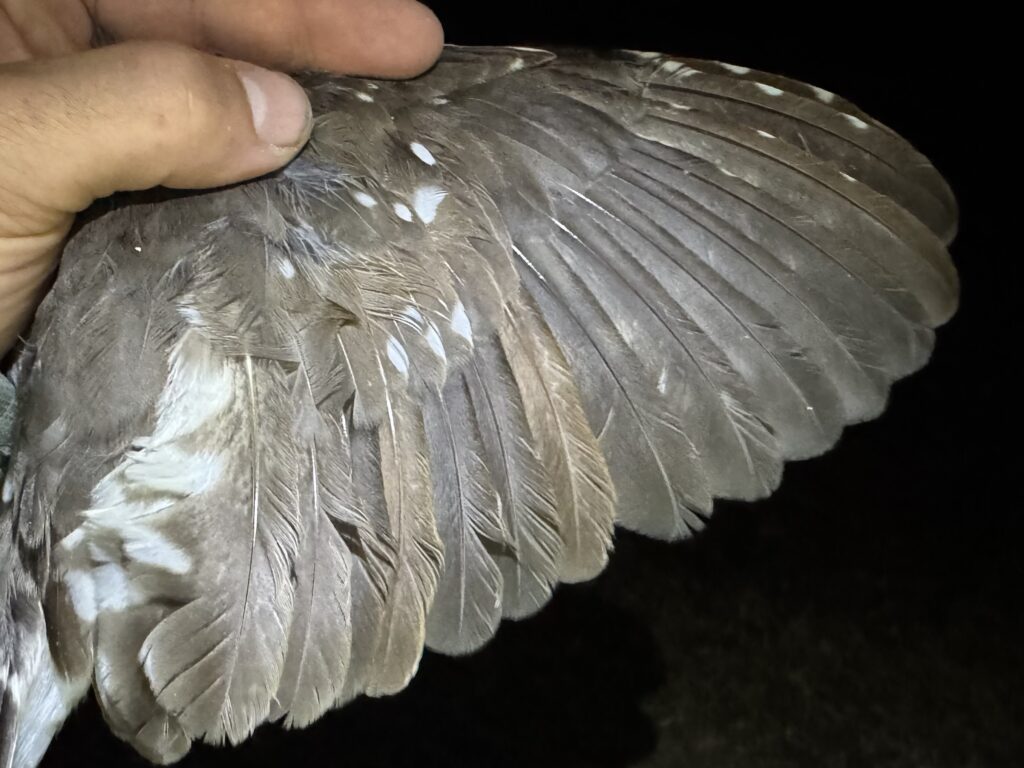
Northwest winds continued into October 2 and so did the owls. We remained consistent throughout the night and ended up with 12 individuals. We had a good opportunity to contemplate molt patterns as we caught several older birds. ASY birds typically have at least three generations of feathers visible on their wings, resulting in a mosaic of different brown and black tones that are equally informative as they are visually interesting. When determining the age of a saw-whet owl it is important to not only consider the age of each feather but also the pattern in which feathers were replaced; although highly variable, there are molt strategies that are used pervasively enough to help age birds more precisely when present.
The weather tampered our efforts and left us with an owl-less night on October 3 but we recovered on October 4 with northwest/west winds and seven owls (and an unsuspecting American Woodcock).
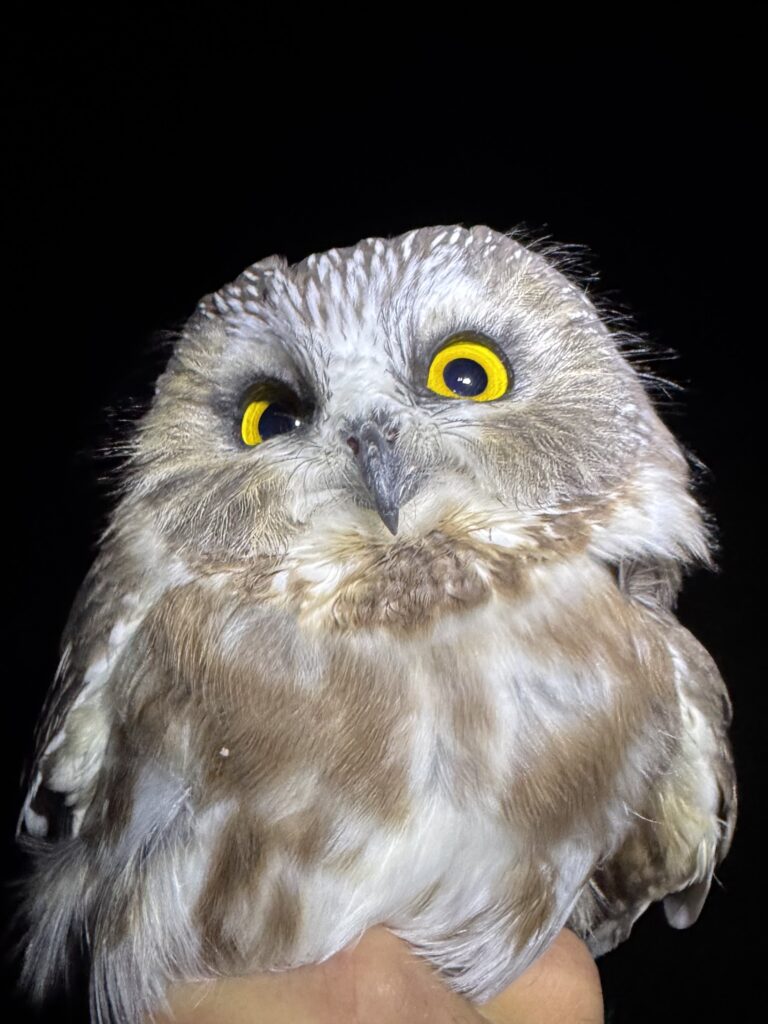
We end our third week with a season total of 55 owls composed of 39 females, 6 males, and 10 unknown. Having yet to fully hit our stride, next week we should start getting a better feel for what kind of fall we’re in store for, and each day we inch closer to peak saw-whet movement. We are looking forward to the many exciting nights ahead!
Species totals to date: NSWO 55, SSHA 1, WTSP 1, AMRO 1, AMWO 1