
The weather is getting warmer, the warblers are here, and that means the raptors are well fed and almost done heading North. Weather has been unpredictable and we’ve had shortened days due to rain and wind. We had our first day of the season getting “skunked” on May 12 (being open all day and not catching a bird). Basically, things are slowing down.
While we have still been seeing raptors most days, their interest in the trapping site seems to be dwindling. The flight is mostly juvenile, or second year birds, at this point (meaning they left the nest last summer). These birds made it through their first year of life but still know nothing about breeding. Since they will not be part of the breeding population this spring, they are in no hurry to get North and stake out a territory. This is why we tend to see adult birds in April and juvenile birds in May.
Even though raptor migration is slowing down, we’ve still been enjoying Passerine migration and seeing some rarities move through. We got a great view of a juvenile dark morph rough-legged hawk yesterday. We’ve also enjoyed listening to the songbirds establish their territories in the woods surrounding the banding site. Black-and-white Warblers, Ovenbirds, Black-throated Green Warblers, and our local Ruffed Grouse have been singing (or drumming!) consistently. Rose-breasted Grosbeak, Brown Thrasher, Indigo Bunting, and even a Barred Owl have been recent arrivals!
We caught our 6th Northern Harrier of the season, a second year male. All harriers have the same plumage as juveniles (pumpkin colored bellies with dark brown backs) and the adult males and females show very different plumages (male “gray ghost” is white underneath with light gray backs and female is creamy white with brown streaks underneath with brown backs).
Our last day of trapping will be May 27 and we are excited to see what we get between now and then (if the weather cooperates!)
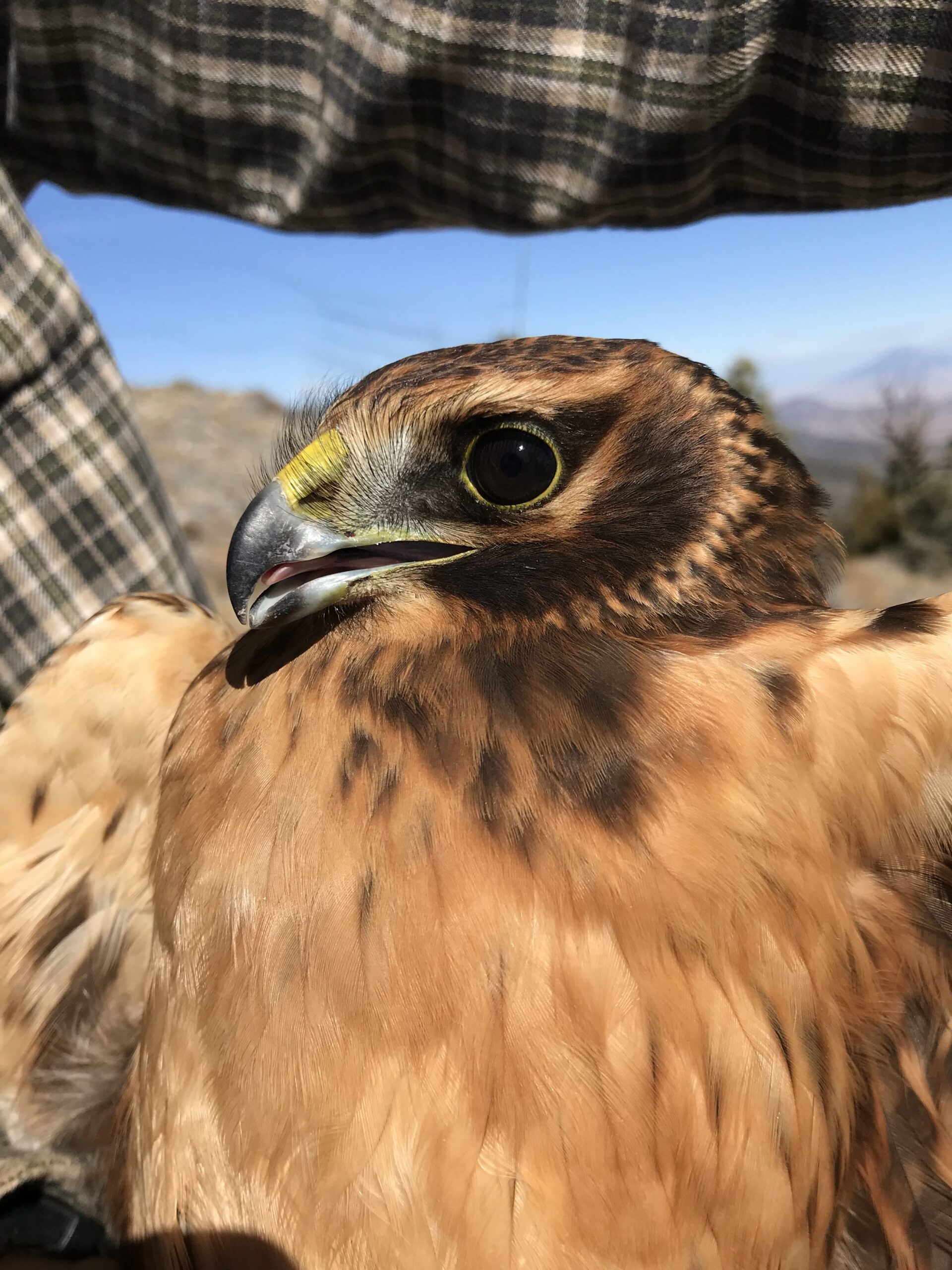
A hatch year (fall) Northern Harrier from the Goshutes HawkWatch site circa 2019.
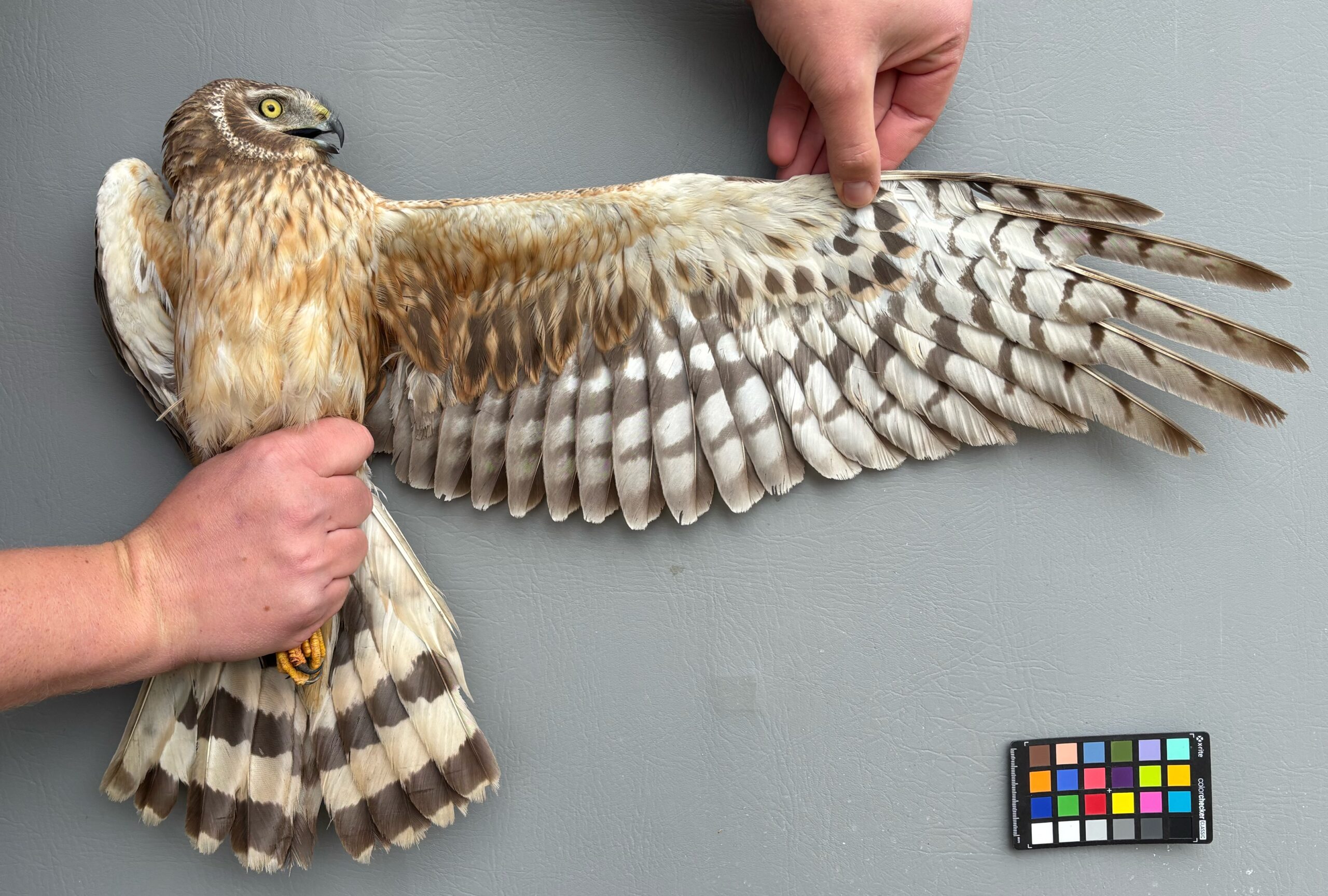
Second year male Northern Harrier slowly losing his “pumpkin belly” and eye turning bright yellow from brown.
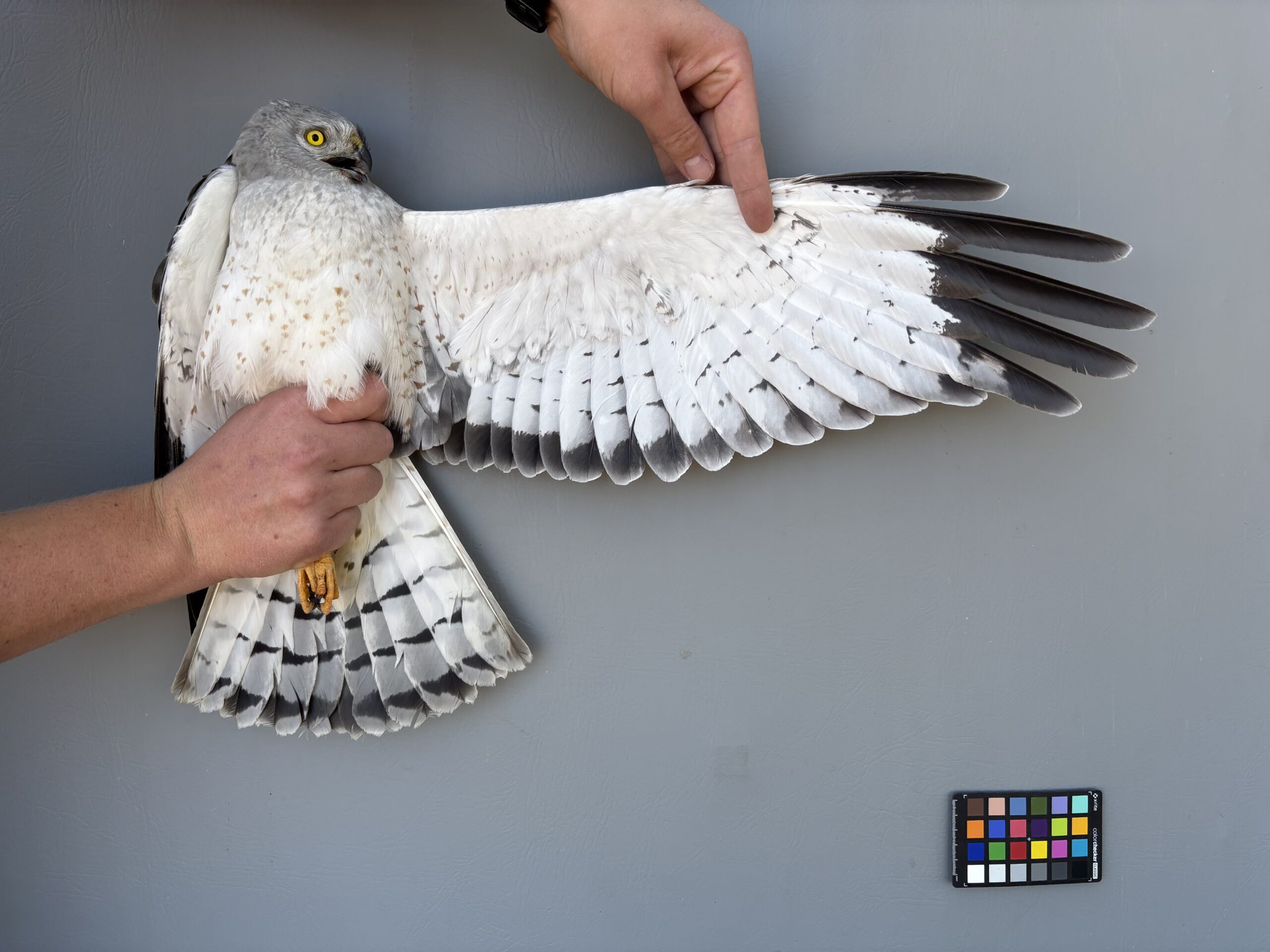
Adult male Northern Harrier showing signature white ventral side.
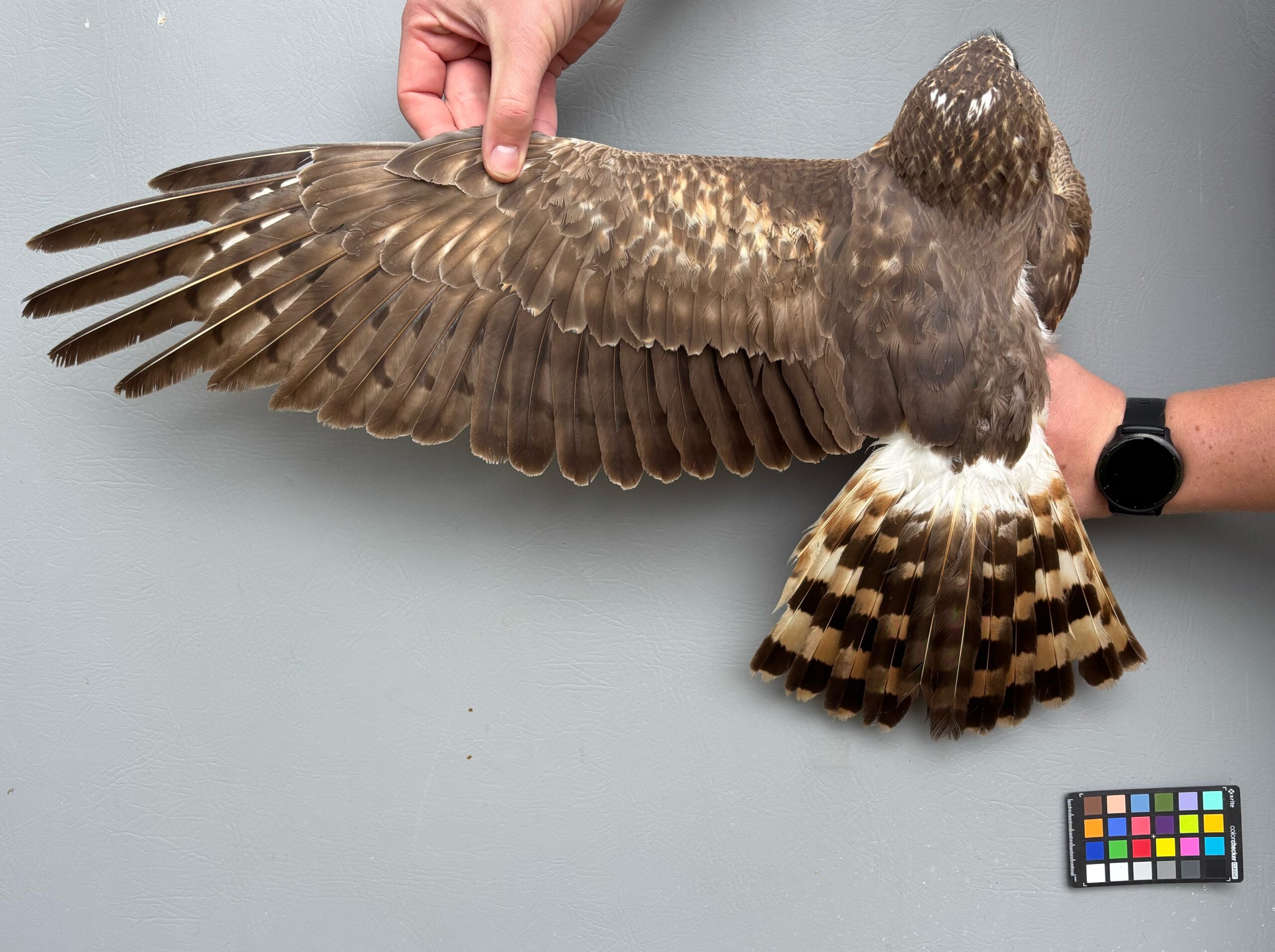
Dorsal side of the second year male Northern Harrier.
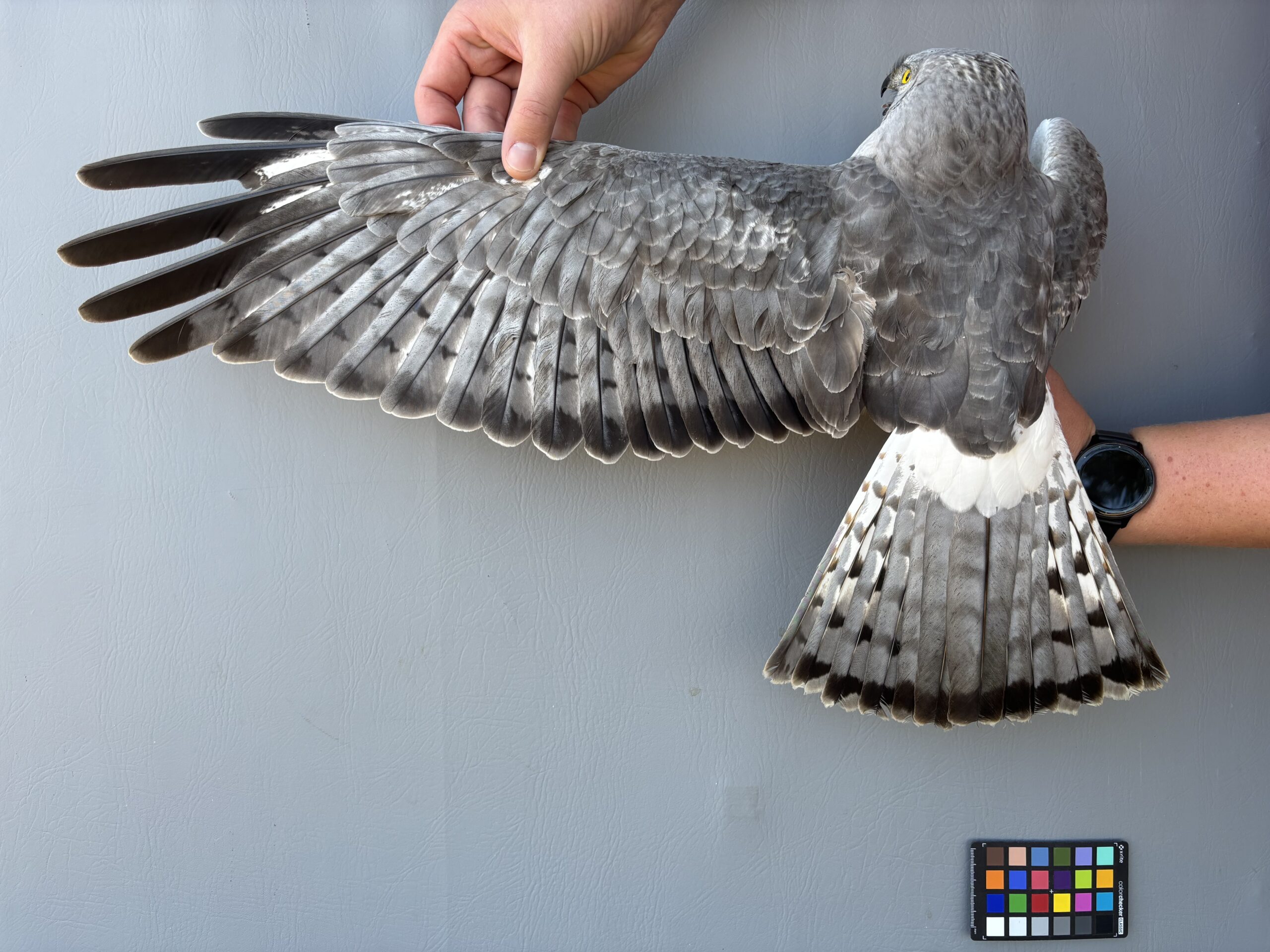
Dorsal side of the adult male Northern Harrier.
Season Total: 136
Red-tailed Hawk: 75
Sharp-shinned Hawk: 45
Northern Harrier: 6
Merlin: 3
Broad-winged Hawk: 3
Cooper’s Hawk: 2
Red-shouldered Hawk: 1
Rough-legged Hawk: 1