
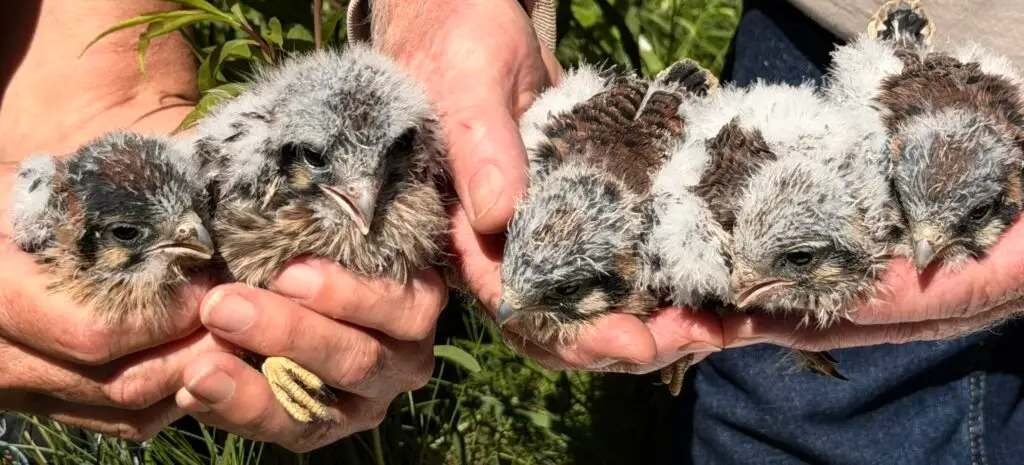
This spring marked an exciting milestone for the Mackinac Straits Raptor Watch as we launched our first year of collaboration with Little Traverse Conservancy (LTC) to monitor American kestrels across northern Michigan. By combining resources, volunteers, and expertise, we were able to greatly expand our monitoring efforts and gain valuable insights into our local kestrel population.
The partnership brought together nest boxes located on both Little Traverse Conservancy properties and several private lands, and volunteer monitors recruited through both organizations. Throughout the breeding season, dedicated volunteers visited their assigned nest box, carefully documenting nesting activity while minimizing disturbance to the birds. MSRW provided the banding expertise and managed the data collected throughout the season.
A Season by the Numbers
In total, volunteers monitored 45 nest boxes—36 on Little Traverse Conservancy properties and 9 on private properties.
The nesting season produced the following results.
- 13 nest boxes contained American Kestrel eggs along with 2 natural nests.
- 10 successful kestrel nests produced chicks that were large enough to be banded.
- 5 kestrel nests unfortunately failed due to predation or eggs that were not viable.
During the banding season, we banded 40 kestrel chicks—18 females and 22 males. In addition, we had the rare opportunity to band one adult female and one adult male when they remained inside the nest box during chick checks, providing valuable information about adult survival and future site fidelity.
Discoveries Beyond the Nest Boxes
While nest boxes are an important conservation tool, kestrels continue to remind us that they don’t always follow our plans.
One of the season’s most memorable discoveries came from an active apple orchard, where a pair of kestrels chose an old fence post instead of one of our nest boxes. Hidden deep within a natural cavity, the nest was impossible to view from above. Using a small inspection camera—our ‘snake camera’—we were able to carefully peer inside and confirm two healthy chicks nearing fledging age. It was a wonderful reminder that even in working agricultural landscapes, natural nesting sites can still provide successful homes for kestrels.
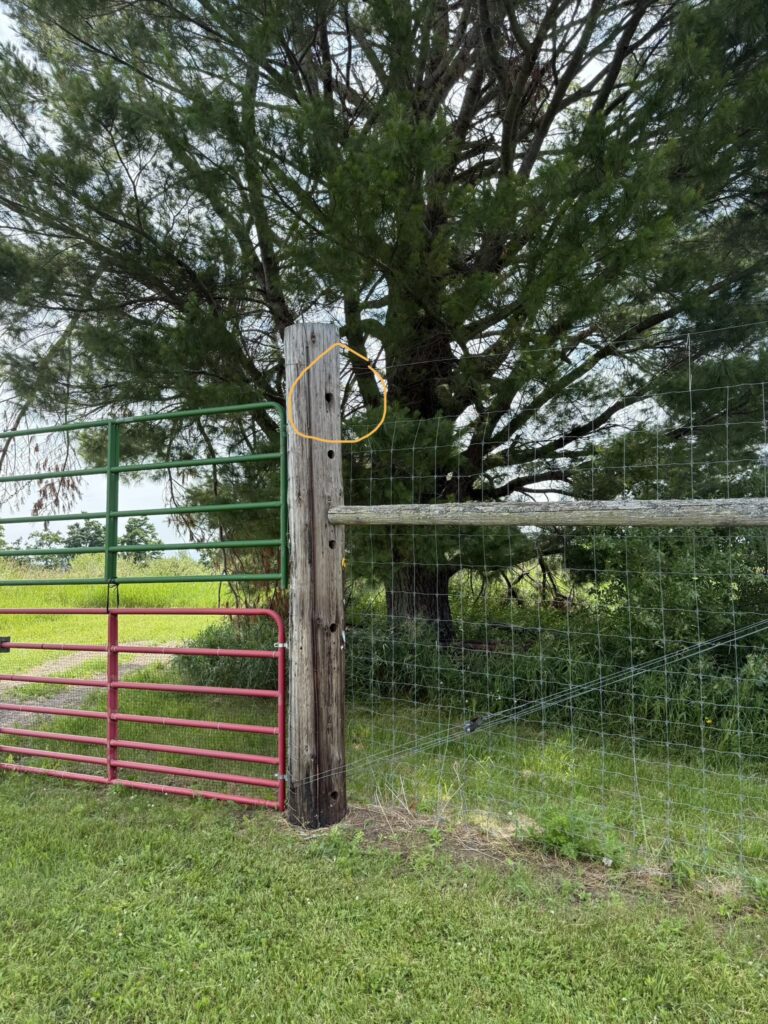
Fence post nest
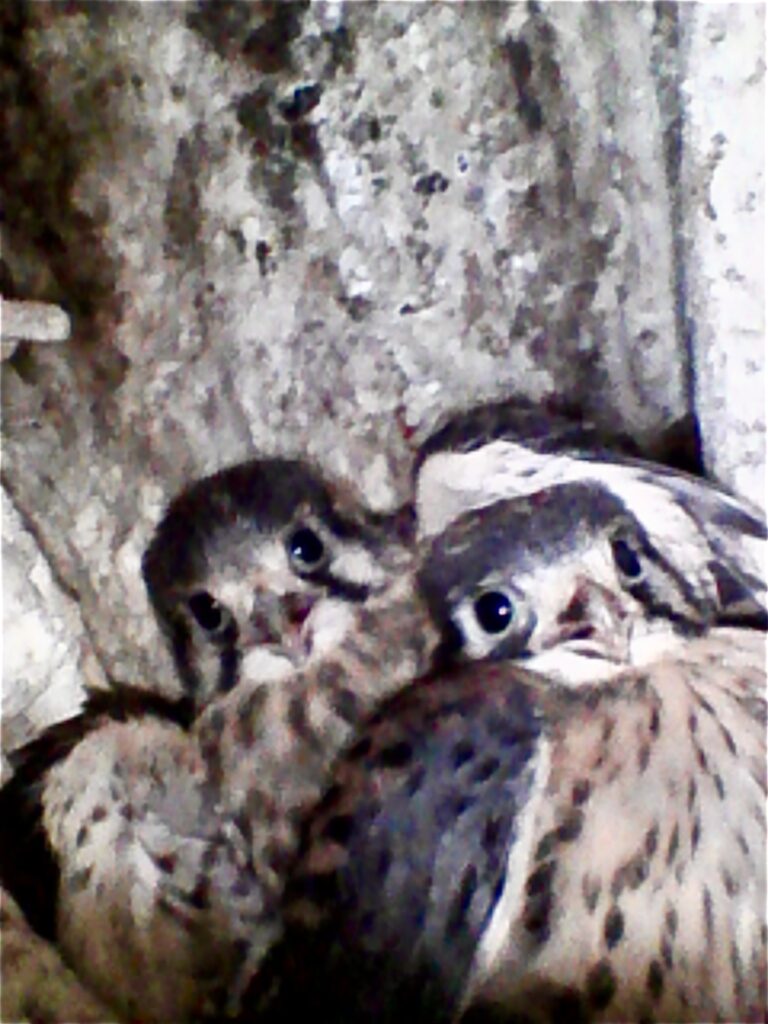
View inside the fence post
Another surprise arrived from a local horse farm. Rather than selecting a tree cavity or nest box, a kestrel pair nested inside the soffit of a horse shed. Unfortunately, three chicks were later discovered on the ground in a corner of the shed after apparently falling from the soffit. Thinking quickly, the farm staff fashioned a makeshift nest using a basket and securely mounted it high in the corner of the shed, giving the chicks a safe place off the ground while allowing the adult kestrels to continue caring for them. Their efforts were successful—the parents resumed feeding the chicks, and once they were old enough, we were able to band three young kestrels: two males and one female. It was a wonderful example of how a little human intervention, done thoughtfully and at the right time, can help wildlife while allowing nature to take its course.
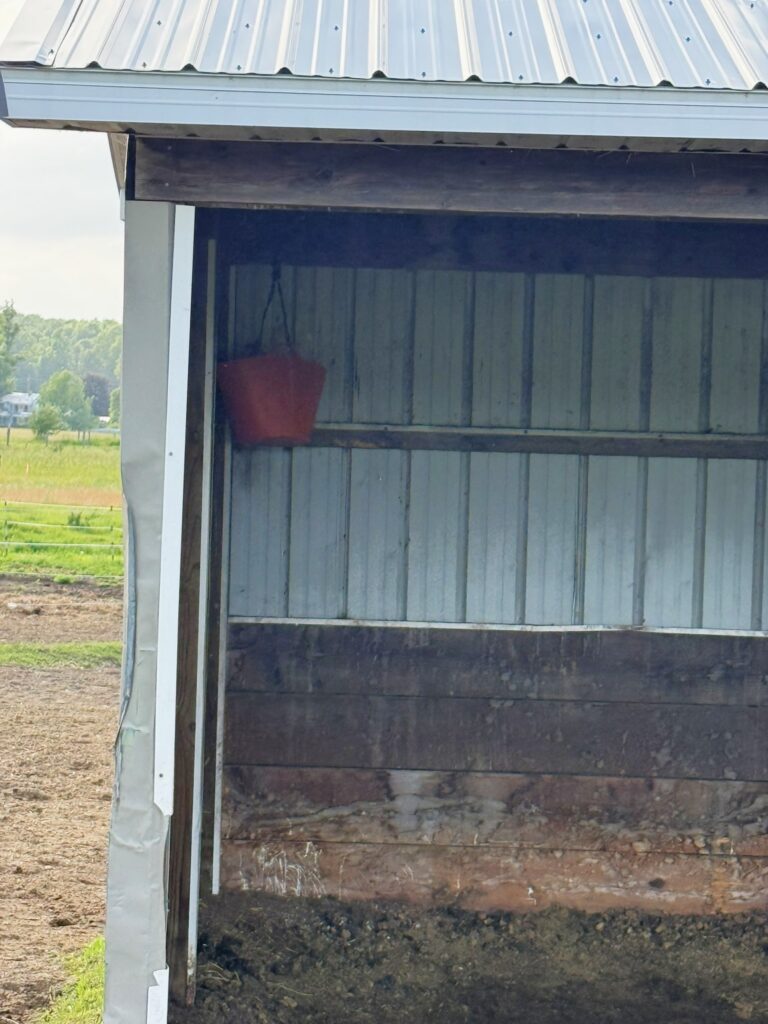
Basket nest
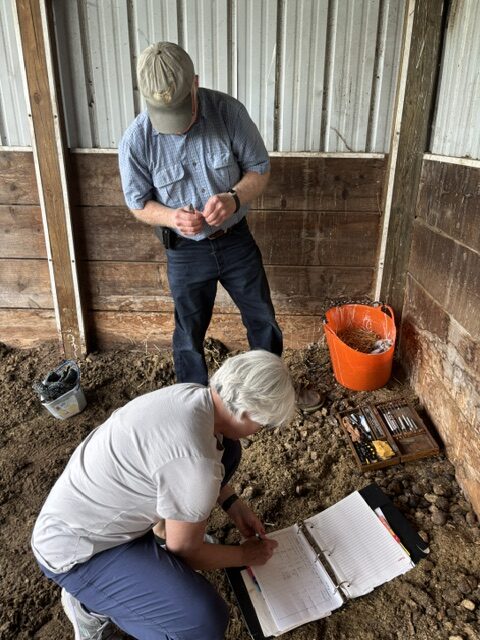
Banding in the shed
These two natural nests were exciting additions to the season and demonstrate that while nest boxes expand nesting opportunities, kestrels continue to use a variety of available cavities across the landscape.
Looking Ahead
Our first year of collaboration exceeded expectations and laid the foundation for what we hope will become a long-term conservation effort. Every volunteer who checked a nest box, every landowner who hosted a box, and every supporter who made this work possible contributed to a better understanding of American kestrels in northern Michigan.
The data collected this year will help us track nesting success, monitor population trends, and improve nest box placement in future seasons. Just as importantly, the program has brought together a growing community of people who care deeply about conserving one of North America’s smallest—and most charismatic—falcons.
We look forward to building on this successful first season and discovering what next year’s kestrels have in store.
Note: Birds captured and banded under a USGS bird banding and marking permit