
In a shocking twist, we have been able to open our nets every single day this last week. While some days we had to open late or close early due to snow showers or wind speeds exceeding 15mph, we will take what we can get around here! However, four of those days resulted in no owls banded. Making up for slow work nights were the three long-eared owls (LEOW) and one barred owl (BAOW) we were privileged to band! These mark the first of the larger owls that we have seen all season, and we were quite excited to see some new faces in our mist nets.
Long-eared owls are most known for their notable “ears,” which are actually not ears at all! Their technical term is plumicorns, which describes the long feather tufts seen on several owl species including great horned owls. The ears on owls are actually hidden behind layers of feathers on the sides of their heads.
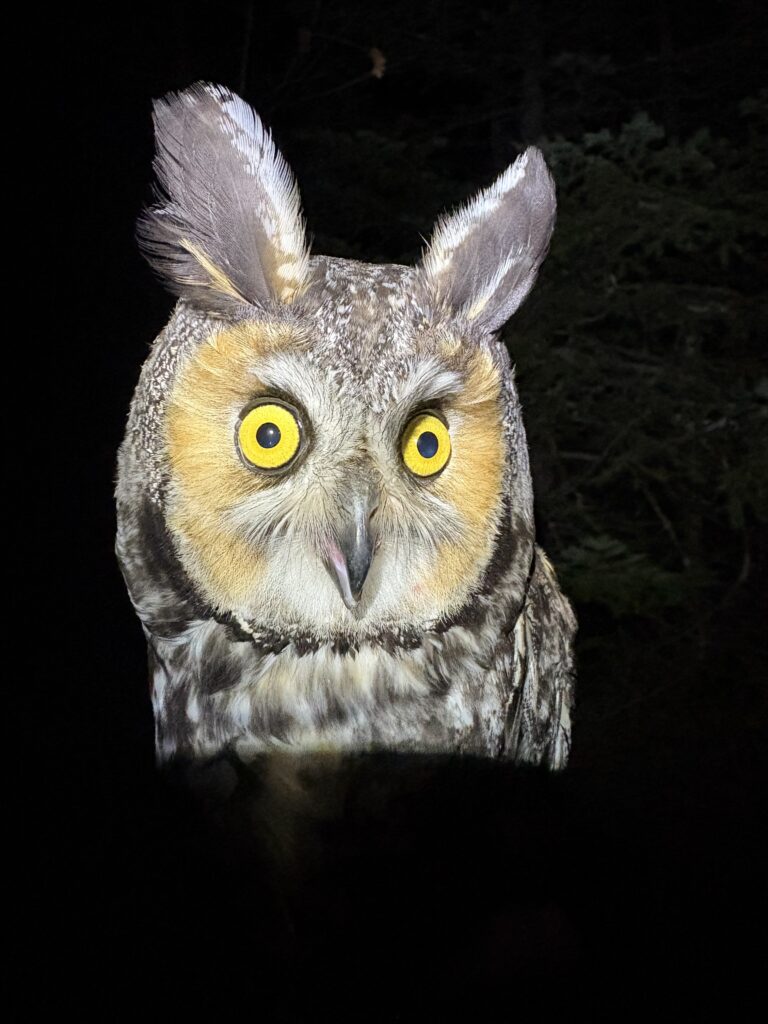
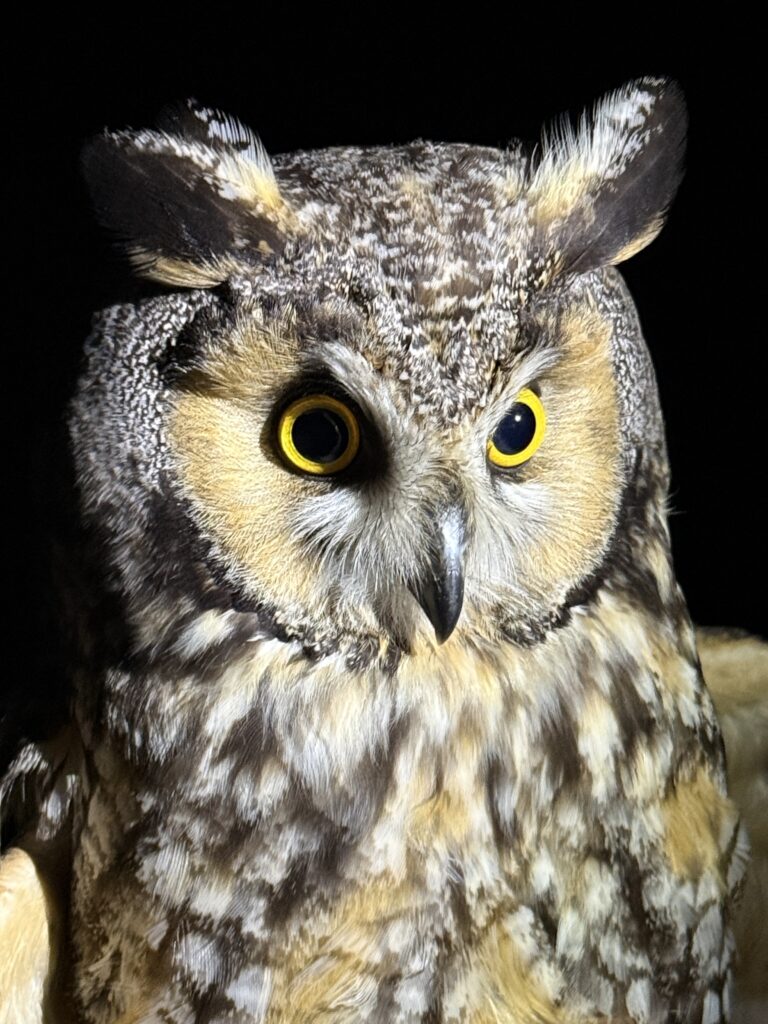
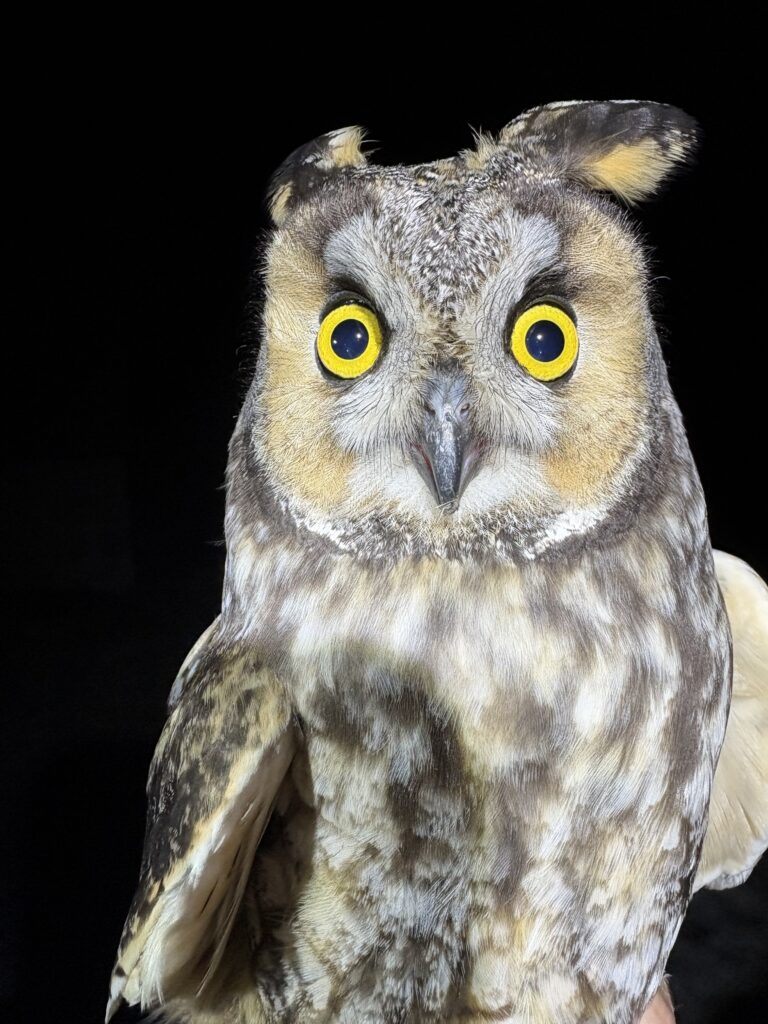
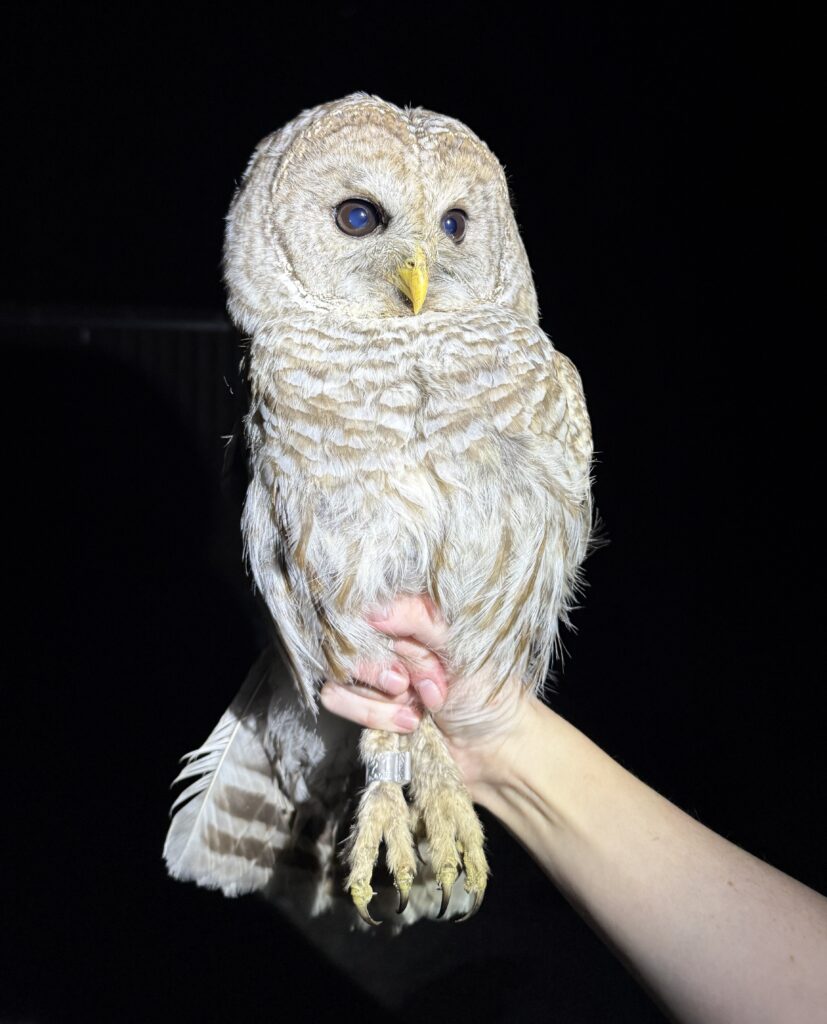
Top 3 photos: long-eared owls (LEOW); Bottom photo: barred owl (BAOW)
Another exciting bird we have gotten to see in hand twice now is an American woodcock (AMWO), also known as a timberdoodle. These spunky shorebirds are often heard at dusk or dawn making their classic “peent” calls in the spring during their breeding season display flights. You may have also seen videos of these birds doing a walk that looks like they are rocking back and forth. This is a common method used for foraging their specialty: earthworms. The rocking creates vibrations in the ground that makes the earthworms move around in the soil, which increases their detectability for the woodcock. Lastly, as you will see in the photo below, the woodcock’s eyes are positioned quite far back on their heads. This adaptation allows for them to keep an eye out for danger while having their heads down to forage. Pretty neat!
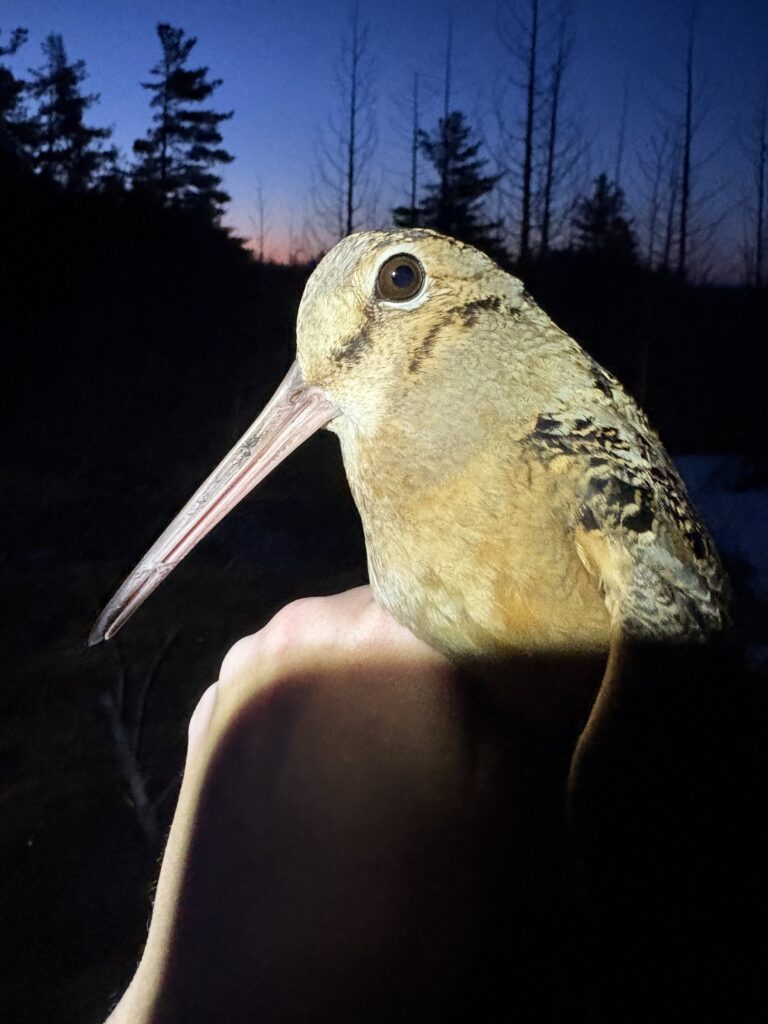
American woodcock (AMWO) that was extracted and released from our mist nets in the early morning hours.
During our nightly walks to and from our nets, we have seen increased salamander activity. Along with many other species, spring is the time of year that these amphibians breed. They typically will congregate at vernal pools to breed. Vernal pools are often a spot of choice for salamanders to deposit their eggs as they are temporary wetlands that will fill with rain or snow melt (both of which we have had plenty of!). Due to their ephemeral nature, fish are absent from these water sources, which is a bonus for the salamander eggs that are a prey item for fish.
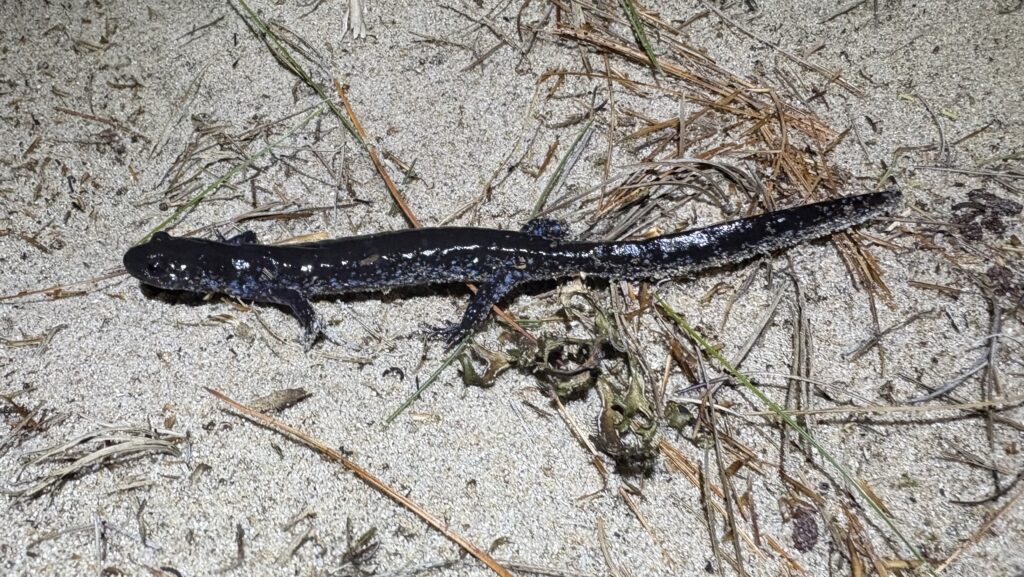
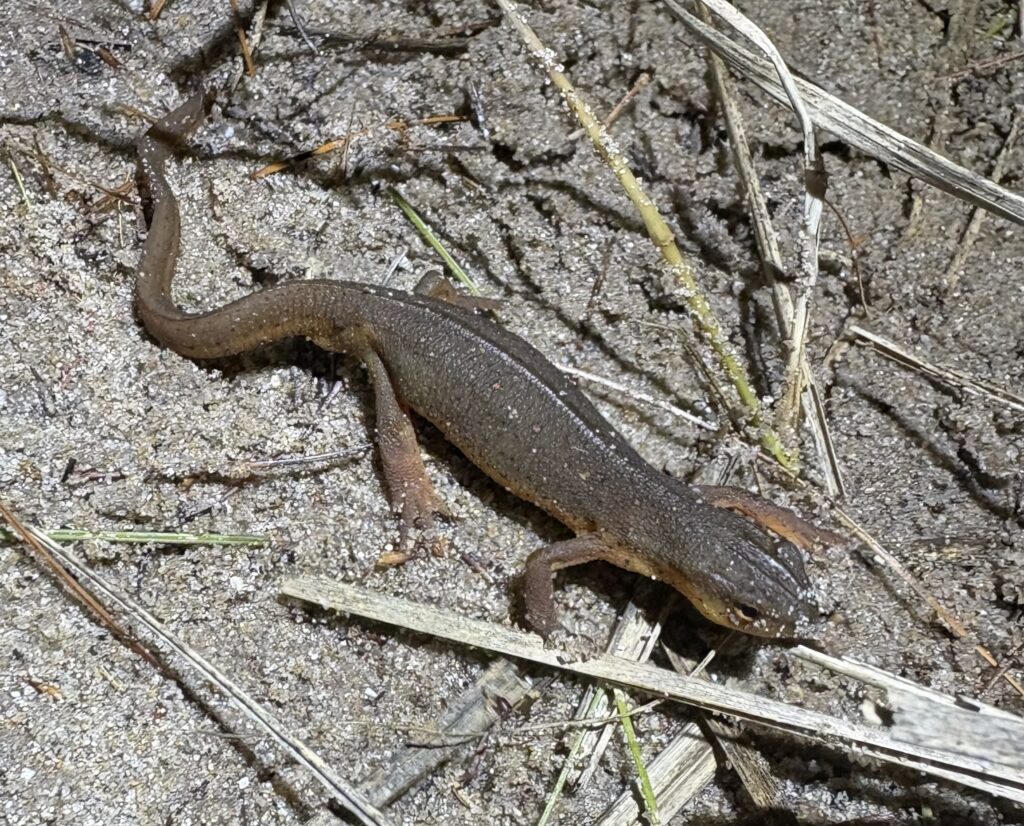
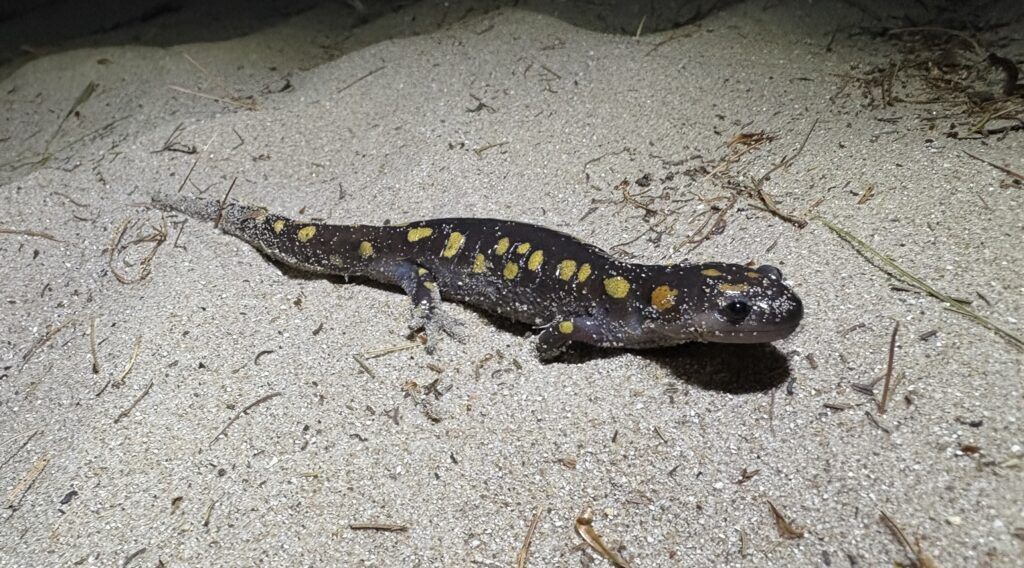
Top photo: blue-spotted salamander; Bottom photos: Eastern newt, spotted salamander
As we head into this next week, keep your fingers crossed for a continuance of this accommodating weather!
Season Totals:
Banded NSWO: 71
Foreign Recaptures: 9
long-eared owls: 3
barred owls: 1
Total: 84