The count has remained productive throughout late April! Recent weather conditions have been highly favorable for migration. From this point on, diversity will start to slowly decrease as waterbird migration winds down.
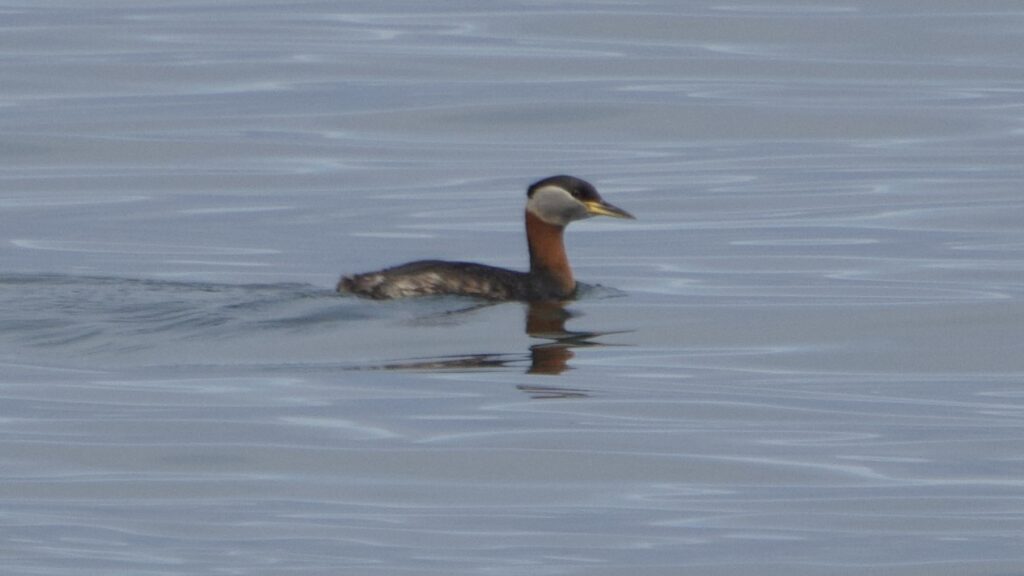
Gull diversity was a highlight this week. Five species of gulls were recorded! American Herring (262) and Ring-billed (856) are most abundant throughout the season. Two separate adult Lesser Black-backed Gulls (2) were observed from McGulpin Point on 04/24 and 04/28.
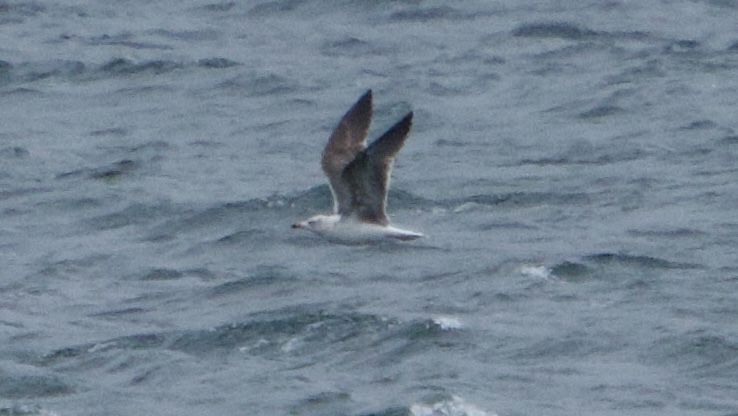
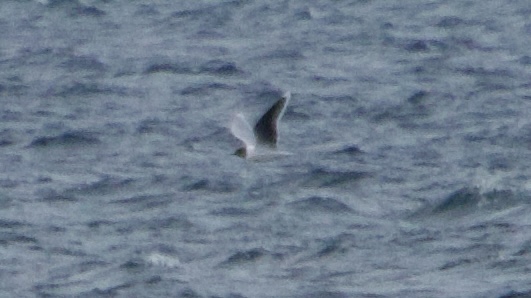
Bonapartes Gulls (647) are moving through in impressive numbers. A strong east wind on 04/27 produced a movement of 483, including multiple flocks of 100+. This count also provided great views of an adult Little Gull (1)! Little Gull sightings on the Great Lakes are rare. This is an Old World species with a small breeding presence in North America.
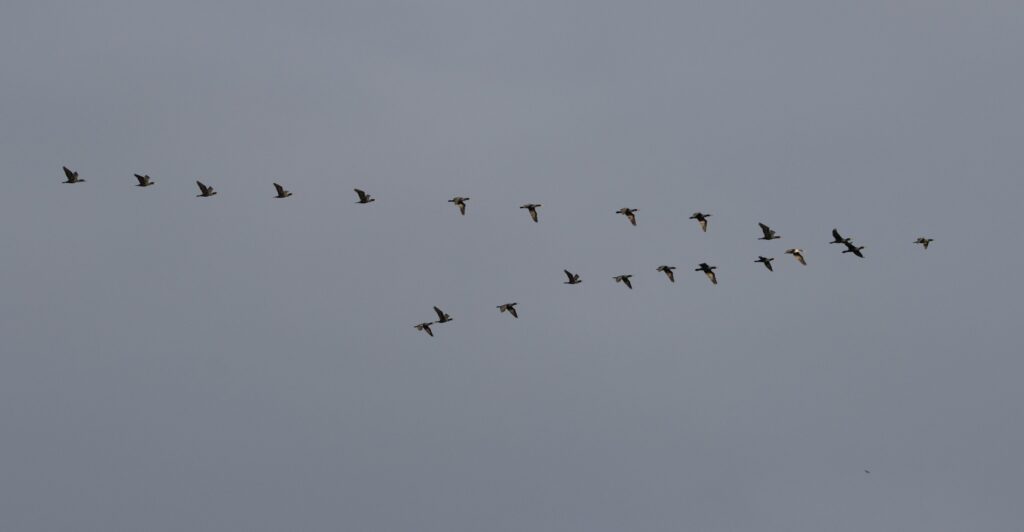
Flocks of Double-crested Cormorants (404) are beginning to return in mass. Migration occurs in large v-shaped flocks, similar to Canada Geese (89) but with frequent gliding motion. Immature cormorants often retain their pale breast into spring (pictured – 4th from right).
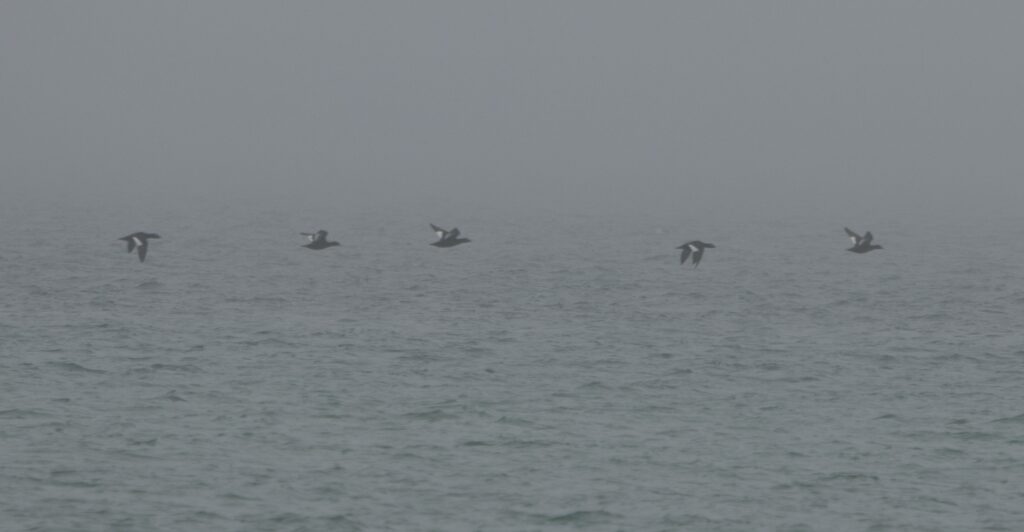
White-winged Scoters (78) are typically a treat for the count with sharp plumage with bold white winged patches. Flocks have been notably scarce, down over 50% from last spring. The first two Surf Scoters (2) for this season were recorded from McGulpin Point on 04/24.
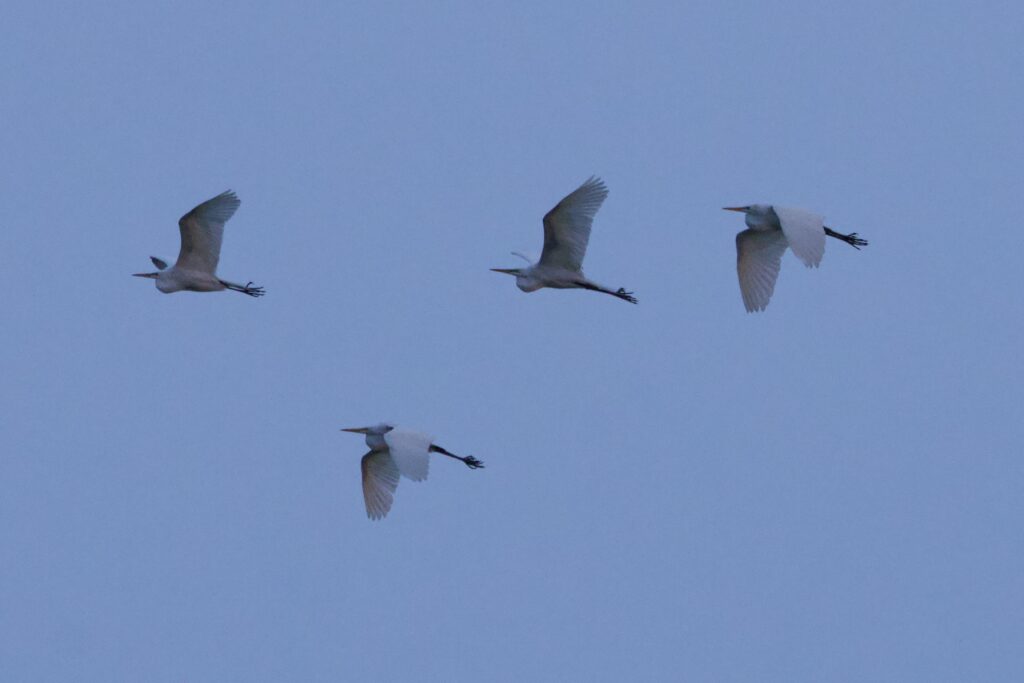
Wading birds have finally returned to the Straits. Great Egrets (13) are becoming increasingly common in northern Michigan. Observation took place almost daily this week. Great Blue Herons (2) are also recorded for the count in smaller numbers.
A flyby group of 6 Pectoral Sandpipers (6) was a notable record from this week, heading west at Graham Point on 04/25.
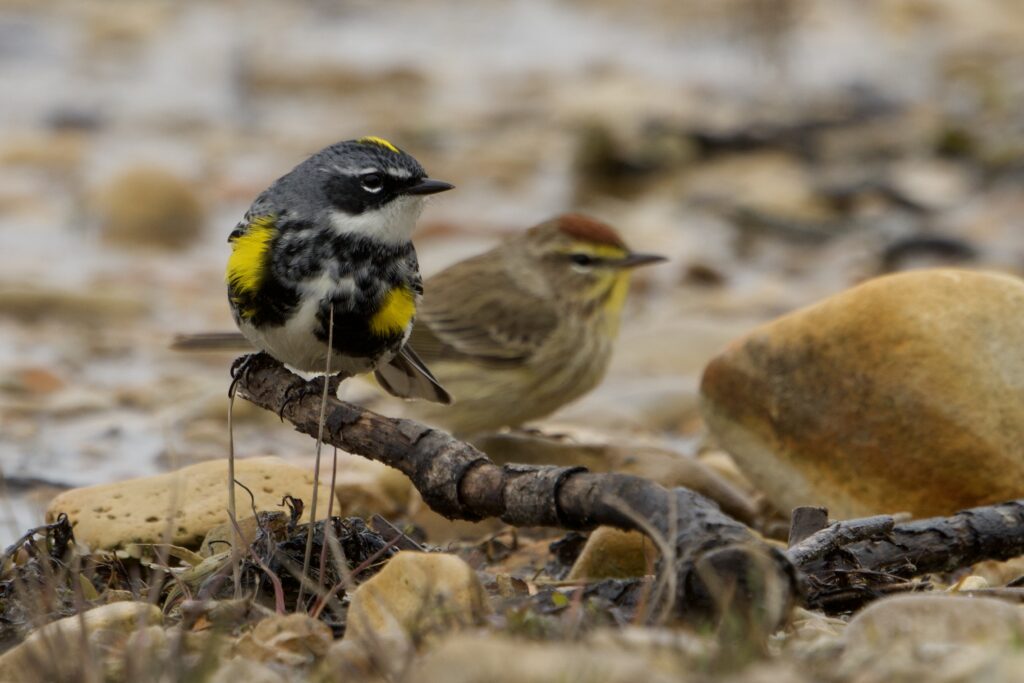
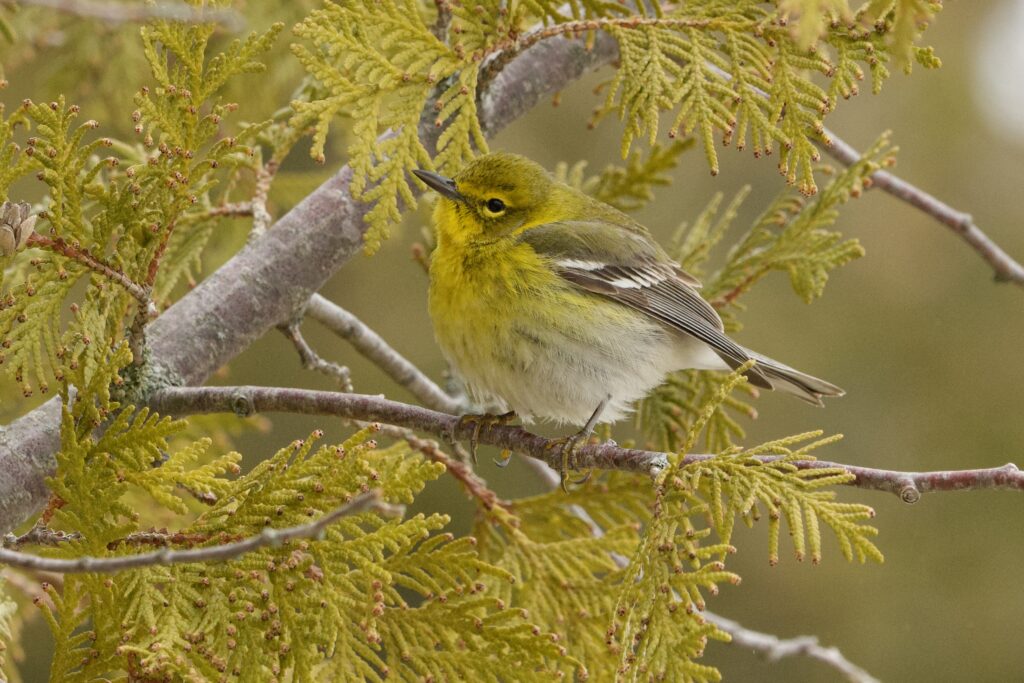
Early migrants warblers are a fun prelude to the waves of passerines that arrive in mid May. Yellow-rumped, Palm, and Pine Warblers are frequent visitors to the count sites.