
We are already past the halfway point of the season! Mid-season counts are notably productive. An impressive diversity of waterfowl are currently on the move through the Straits. A relatively slow start to this week changed dramatically when a cold front arrived on October 6th. Winds switched to the northwest after a long hiatus and the duck floodgates finally opened.
Just before 10am on October 6th, a wall of dark clouds rolled in from the west. This commenced a substantial two-day movement of Redhead. A consistent stream of large Redhead flocks, heading exclusively east at great height, resulted in an impressive two day total of 16,950. This included 6,138 from Graham Point on October 6th and 10,812 from McGulpin Point on October 7th. This week, migrating groups of Redhead (17,755) were often intermixed with Greater (119) and Lesser Scaup (83).
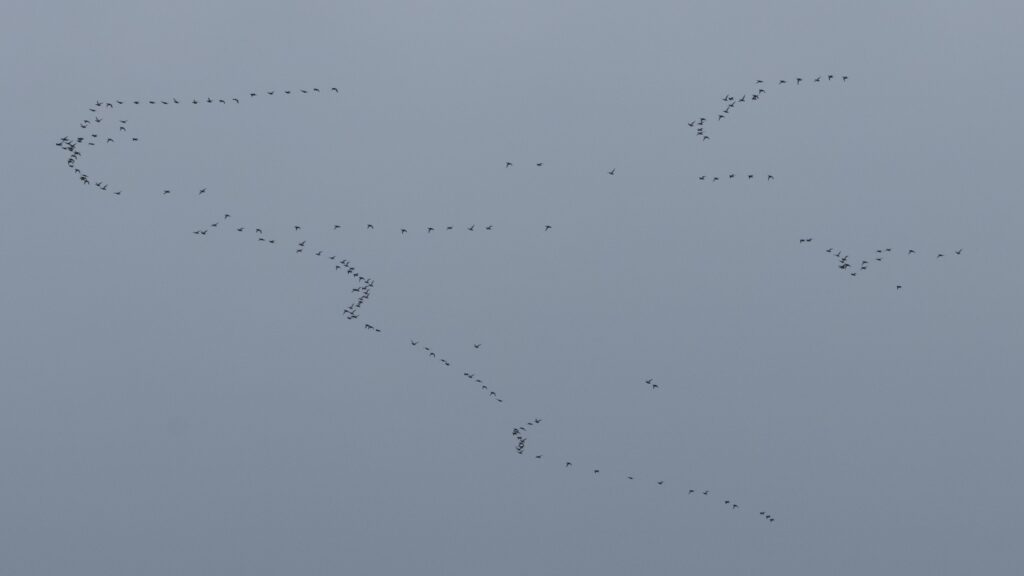
Late fall migrants are becoming more abundant in the Straits. A nice push of White-winged Scoters (52) occurred near the end of the week. The first Surf Scoters (10) for the fall season were recorded. Red-breasted mergansers (467) have also arrived in significant numbers.
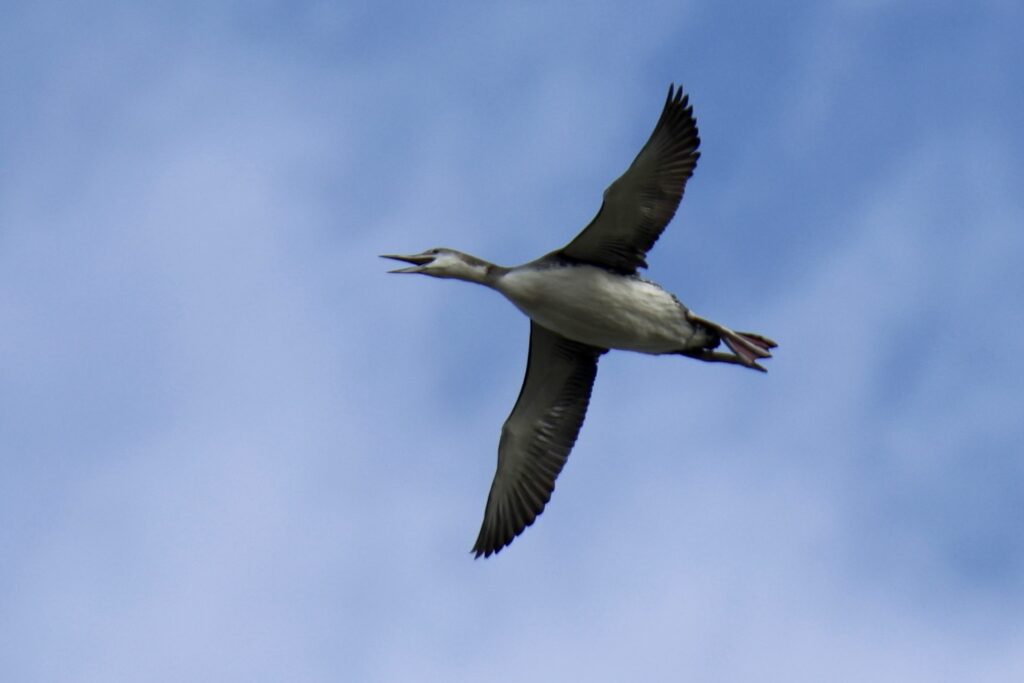
This week was fantastic for loon migration. Weekly results include 592 Common Loons and 26 Red-throated Loons. Red-throated Loons sightings now occur daily! A distinct behavior of repeatedly raising and lowering their head in flight is a useful ID trait.
Notable sightings from the week include a second cycle Lesser Black-backed Gull (1) on October 7th. In recent decades, this species has become more prevalent on the Great Lakes as populations in Greenland and Iceland are expanding.